
Leadership Search Profile: Senior Director of Research Operations
The University of Wisconsin School of Medicine and Public Health seeks an accomplished senior administrative leader to serve as its inaugural Senior Director of Research Operations in the Office of Basic Research, Biotechnology and Graduate Studies.
Apply by April 30, 2026.
This role is responsible for the efficient and effective management of the school’s research enterprise, an exceptional opportunity to have significant impact across one of the top public medical schools in the nation and its embodiment of the Wisconsin Idea, which is the guiding principle that research and education at the university should impact people’s lives throughout the state and beyond.
Reporting to leadership of the school’s office of research, who is responsible for research strategy, development and oversight, the Senior Director of Research Operations directs the central administrative and operational infrastructure supporting research — ensuring compliance, optimizing resource utilization, and facilitating the successful execution of the school’s research mission across all departments, centers and institutes.
The senior director will develop, implement and monitor operational policies, procedures and best practices to streamline research administration and optimize workflows. The role will be charged with leading initiatives to improve the efficiency and effectiveness of research resources, including shared resources and space allocation.
The successful candidate is required to have a blend of biomedical research knowledge, financial acumen and operational expertise in a complex academic medical and public health environment. This is an inaugural position.
Organization Overview
UW–Madison
Since 1848, this campus has been a catalyst for the extraordinary. As a public land-grant university and one of the most prolific research institutions in the world, UW–Madison is home to those who are driven by a desire to both explore new worlds and to apply new ideas to real-world problems.
Research and academic excellence
With a total annual budget of nearly $5 billion, including more than $1.9 billion in annual research expenditures, UW–Madison has been in the top 10 in national research spending every year since 1972 and is currently ranked fifth.
The university is home to more than 27,000 faculty and staff and 52,000 undergraduate, graduate and professional degree students. Members of the student body represent all 50 states and 129 countries.
The university ranks as the number two best public university in the country (TIME, 2026) and #30 best university worldwide (Center for World University Rankings, 2025).
Improving lives beyond the classroom
The Wisconsin Idea — the principle that the university should improve people’s lives beyond the classroom — has been guiding the efforts of UW–Madison Badgers for more than a century. The university has been dedicated to studying poverty and social inequity for 50 years, ranks #1 among large schools for producing Peace Corps volunteers and boasts 20 Nobel Prize winners among its faculty and alumni including 10 winners of the Nobel Prize in Physiology or Medicine.
We put the Wisconsin Idea into action through research, clinical care, and training that advances healthy people and healthy communities. Our aim is to be a national and even global model for academic medicine, driven by a spirit of purposeful ambition and sense of service.
- Nita Ahuja, MD, MBA, dean of the University of Wisconsin School of Medicine and Public Health
School of Medicine and Public Health
The University of Wisconsin School of Medicine and Public Health (SMPH) is recognized as an international, national and statewide leader in education, research, and service. Founded in 1907, it transformed into the nation’s first School of Medicine and Public Health in 2005 to integrate the principles and power of interwoven medical and public health approaches in all of its missions.
With nearly 6,000 employees, including over 2,000 faculty, the school’s engagement spans the entire state of Wisconsin and includes a deep commitment to improvement of the health of the population. This commitment manifests itself in innovative models that serve as exemplars for the rest of the country.
Advancing academic medicine through excellence and discovery
Members of the school rapidly translate discovery into application and continually foster synergies between clinical care, education and research. Consistently ranked among the nation’s top medical schools, SMPH has established high-performance programs spanning the entire spectrum of academic medicine.
Rankings:
- UW–Madison ranks #5 in the country for research expenditures (NSF Higher Education Research and Development Survey)
- The university ranks #3 in the nation for PhDs earned in biological and biomedical sciences (National Center for Science and Engineering Statistics 2024 Survey of Earned Doctorates)
- UW–Madison ranks as #2 public university in the country and #20 overall worldwide in the World’s Top Universities of 2026 analysis (Time Magazine)
- The school ranks #24 among U.S. medical schools (#10 public medical school) for NIH funding in federal fiscal year 2025, with two departments — Urology and Radiology — ranked in the top 10 (Blue Ridge Institute for Medical Research)
- The school ranks Tier 2 in best medical schools for research and Tier 2 for primary care (U.S. News and World Report 2025 rankings)
- The school ranks #14 among medical schools with the most graduates practicing in rural areas (U.S. News and World Report)
Renowned faculty
The school’s faculty hold appointments in 28 departments — 18 in the clinical sciences and 10 in the basic sciences. The faculty is composed of some of the nation’s leading researchers, educators and innovators including members of the National Academies and honorees of awards such as the Kavli Prize, the Louisa Gross Horwitz Prize, Guggenheim fellows, and the American Innovator Award.
Mission and values
The school strives to realize its vision of healthy people and healthy communities through remarkable service to patients and communities, outstanding education and innovative research. It upholds the values of integrity and accountability, compassion, social impact and belonging, and excellence. The school’s Shared Guidelines for Professional Conduct help all faculty, staff and learners embody these values in their daily activities; and it fosters a culture dedicated to creating a collaborative, respectful and welcoming environment in which everyone thrives.
Research Strengths
The school’s broad, integrated biomedical research enterprise connects foundational discovery to clinical application and public health impact. This dynamic research environment is supported and advanced by a central administrative leadership office, the Office of Basic Research, Biotechnology and Graduate Studies.
The school is closely aligned with UW Health, our academic health system partner, enabling seamless translation of discovery into patient care and clinical innovation.

Office of Basic Research, Biotechnology and Graduate Studies
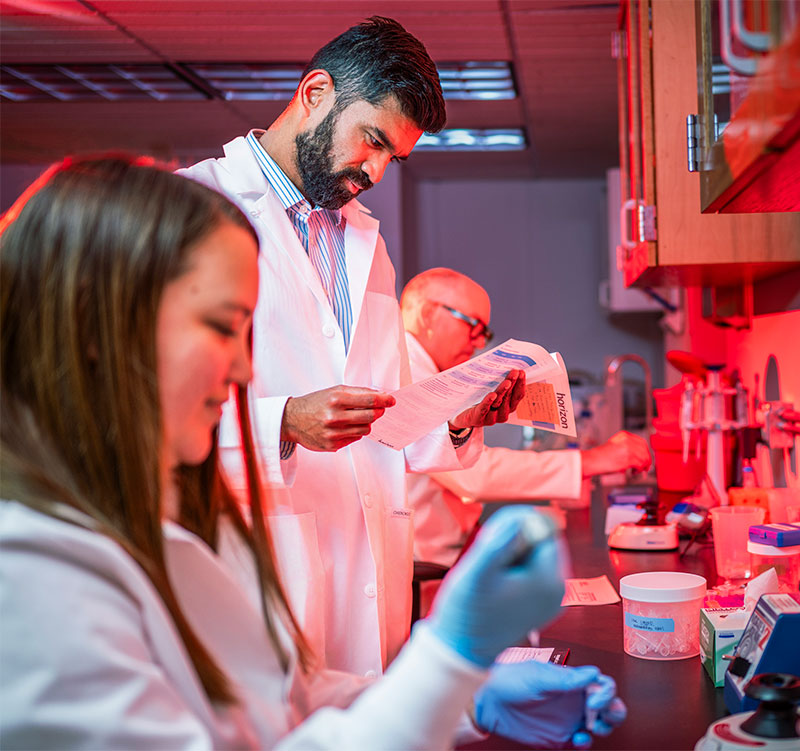
The Office of Basic Research, Biotechnology and Graduate Studies serves as the strategic and operational hub for foundational research and graduate education at the School of Medicine and Public Health. The office plays a critical role in sustaining scientific excellence, while positioning the school for future growth in discovery, translation to the bedside and workforce development.
The office supports faculty, trainees and staff as they launch and grow cutting-edge research programs. With experts in proposal development, grants administration, research compliance, shared resources, basic research training and industry engagement, the office promotes research collaboration, innovation and fundamental discovery. The office’s ultimate goal is to translate research outcomes to improve the health of people and communities in Wisconsin and beyond.
Key focus areas within the office that are within the purview of the Senior Director of Research Operations role include:
- Counsel to research centers and institutes about funding opportunities
- Facilitation of faculty recruitment, retention and bridge funding
- Leadership of the Research Administrative Services team
- Faculty support programs for preparation of proposals, contracts and sponsored agreements
- Oversight of a faculty mentoring program for first-time NIH R01 proposals
- Oversight of shared resources including instrumentation, technologies, and consultation services
- Partnership on basic research training, biohealth industry engagement, and clinical trials
- Oversight of research space planning
The Community
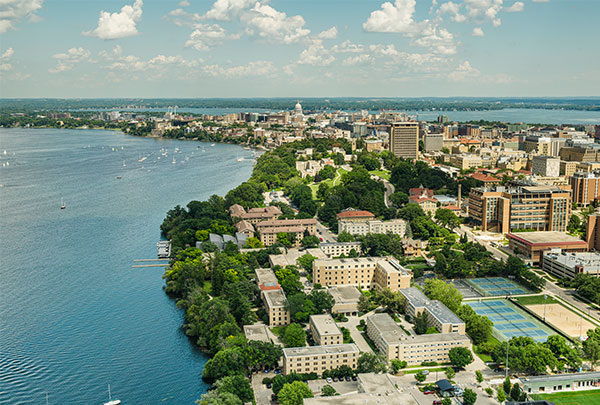
Located on an isthmus between two lakes, Madison is the capital city of the state of Wisconsin. Madison has been voted in the top 100 Best Places to Live in the USA (Liveability, 2023) and ranked the seventh Happiest City in America (WalletHub, 2025). Madison is also:
City for Best Work-Life Balance (Elevate Leadership, 2026)
Best Cities for STEM Jobs (WalletHub, 2024)
Best State Capitals for Safety (WalletHub, 2024)
Madison is the second largest city in the state, with a city population of approximately 285,000 and regional population of over 1 million. The city is within easy driving range of Chicago and Milwaukee. Madison offers numerous unique neighborhoods and commercial areas including the Capitol Square, State Street, Willy Street, Shorewood Hills, Maple Bluff, and Hilldale. Suburbs and surrounding smaller communities include Sun Prairie, Middleton, McFarland, Verona, Cottage Grove, Waunakee and Fitchburg.
The city’s technology economy is growing rapidly, and the region is home to the headquarters of Epic Systems, Exact Sciences, Promega Corporation, American Family Insurance, Trek Bicycle, Sub-Zero, and Lands’ End, as well as many biotech, digital health and health tech startups.
Madison is home to one of the strongest local food scenes in the country with restaurants by multiple James Beard Award winners and semifinalists, gastropubs and farm-to-table restaurants. From April to October, the Capitol Square hosts the impressive Dane County Farmers’ Market, the largest producer-only farmers’ market in the country.
Love of the Arts
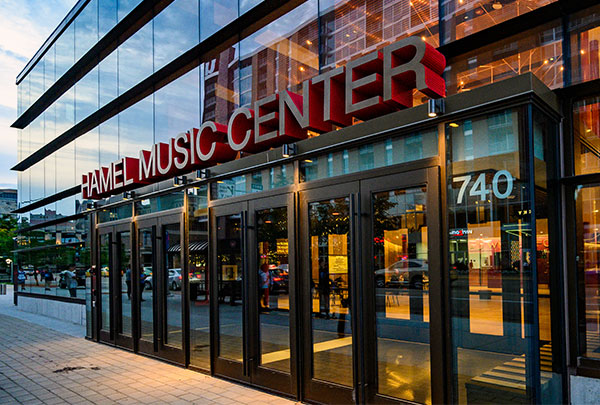
Madison is rich with cultural offerings such as the Overture Center for the Performing Arts, Orpheum Theatre, Concerts on the Square, Madison Symphony Orchestra, Madison Opera, UW–Madison Chazen Museum of Art, and Madison Museum of Contemporary Art, among others.
Natural Beauty
Madison is renowned for its parks and greenspaces, helping residents stay connected to nature and outdoor recreation year-round. Outdoor attractions include the free Henry Vilas Zoo, Olbrich Botanical Gardens, the UW Arboretum, and numerous parks and lake access.
Lively Fandom
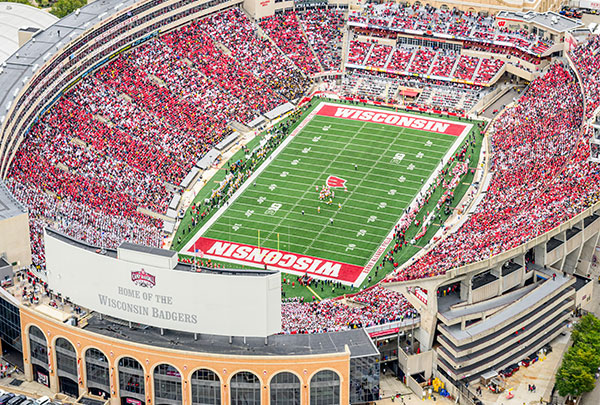
The city has a dedicated athletics fanbase which largely centers around the University of Wisconsin–Madison. Sports venues include Camp Randall Stadium, the Kohl Center, LaBahn Arena, Wisconsin Field House and the Alliant Energy Center.
Madison is home to Forward Madison FC, the first professional soccer team in the city, and Rally Madison FC, as well as the Madison Mallards baseball team and Madison Night Mares softball team. Marquee endurance sports and specialty sporting events include IronMan Wisconsin and IronMan 70.3, Madison Marathon, and many national and international championship competitions.
The Application Process
All applications, nominations and inquiries are invited.
Applications should include, as separate documents, a CV/resume and a letter of interest. Review of applications has begun, and all applications should be received by April 30, 2026.
Please email Deb Gugel, Senior Faculty Recruiter, for assistance.
Confidentiality
Unless confidentiality is requested in writing, information regarding applicants must be released upon request. Finalists cannot be guaranteed confidentiality. The University of Wisconsin is an equal opportunity, affirmative action employer.