
Nobel Prize Awardees
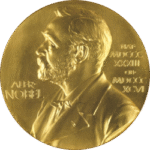 The Nobel Prize in Physiology or Medicine is one of the highest honors in basic and biomedical science, recognizing researchers whose discoveries have fundamentally advanced our understanding of human biology or transformed medical practice.
We are proud to have had 10 Nobel Prize winners associated with the university — an enduring testament to the spirit of curiosity, innovation and scientific leadership that defines the institution.
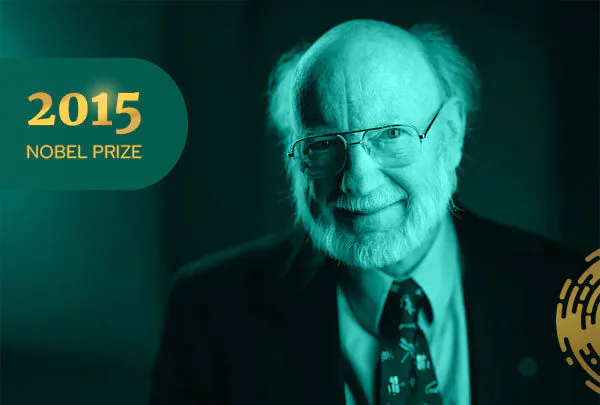
2015 – William C. Campbell
MA ’54, PhD ’57 zoology
For the discovery of a drug that treats infections caused by roundworm parasites.

2007 – Oliver Smithies
Professor of genetics and medical genetics
For introducing specific gene modifications in mice using embryonic stem cells.
1999 – Günter Blobel
PhD ’67 oncology
For the discovery of how proteins are transported into the correct places within a cell.


1991 – Erwin Neher
MS ’67 biophysics
For the discovery of a method to study ion channels in cell membranes.
1975 – Howard Temin
Professor of oncology
For research on cancer-causing retroviruses and their interaction with the genetic material of cells.


1968 – Har Gobind Khorana
Professor of biochemistry; co-director of the Institute for Enzyme Research
For the interpretation of the genetic code and its function in protein synthesis.
1958 – Edward Tatum
MS ’32, PhD ’34 biochemistry
For the discovery that genes act by regulating definite chemical events.


1958 – Joshua Lederberg
Founding chair and professor, Department of Medical Genetics
For his discoveries concerning genetic recombination and the organization of the genetic material of bacteria.
