
Prestigious Research Awards
At UW–Madison, faculty and researchers are empowered to pursue bold ideas, and their impact resonates far beyond campus.
Faculty achievements have earned recognition from leading organizations around the world, including awards deemed “highly prestigious” by the National Research Council. These honors celebrate not only exceptional scholarship and visionary creativity, but also the courage to lead, to innovate, and to advance knowledge in ways that uplift communities and shape a better future for society.
National Academies
 The National Academies of Sciences, Engineering, and Medicine bring together leading experts to provide independent, evidence-based guidance on major scientific, technological, and health challenges. Membership across the Academies is considered a top honor, recognizing individuals whose work has significantly advanced their fields.
National Academy of Medicine
2025 - Margaret Schwarze, MD, MPP
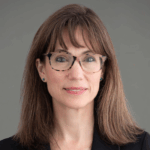 Margaret Schwarze, MD, MPP, is the endowed Morgridge Professor in Vascular Surgery and a medical ethicist, nationally recognized in surgical decision making, informed consent, and end-of-life care. Her research focuses on improving communication between patients facing end of life and their surgeons so that patients can avoid unwanted treatment, consider consequences like loss of independence and make decisions that align with their values, preferences and goals.
2019 - Nita Ahuja, MD, MBA
 Nita Ahuja, MD, MBA, is the Dean of the University of Wisconsin School of Medicine and Public Health. She is a renowned surgeon-scientist and cancer-care innovator whose treatments have drawn patients from around the world. She has held top roles at some of the nation’s leading research universities and health systems, most recently at Yale School of Medicine.
2019 - Jonathan Patz, MD, MPH
 Jonathan Patz, MD, MPH, is Vilas Distinguished Achievement Professor and the John P. Holton Endowed Chair of Health and the Environment. His research focuses on understanding connections between solutions to climate change and how they benefit human health. He has also been a leader in U.S. public policy.
2015 - Anna Huttenlocher, MD
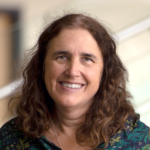 Anna Huttenlocher, MD, is a professor of medicine in the Department of Pediatrics and in the Department of Medical Microbiology and Immunology. She’s a pediatric rheumatologist and physician-scientist with expertise in treating autoimmunity and immune dysregulation, focusing her research on understanding the mechanisms of inflammation and its resolution. Her laboratory is engineering stem cells to generate immune system functions that can be applied to treatment of patients with uncontrolled infection or cancer.
2015 - Ned H. Kalin, MD
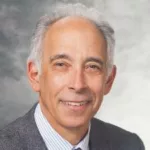
Ned H. Kalin, MD, is the Hedberg Professor of Psychiatry, chair of the Department of Psychiatry, and director of both the HealthEmotions Research Institute and the Lane Neuroimaging Laboratory. He is also a psychology professor and an affiliate scientist at the Wisconsin National Primate Center. His research focuses on understanding how stress affects the development of mental illness and the mechanisms that cause vulnerability to anxiety and depression in children.
2013 - David L. DeMets, PhD
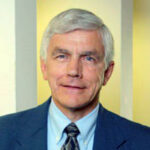 David L. DeMets, PhD, is the Max Halperin Emeritus Professor of Biostatistics and the founding chair of the Department of Biostatistics and Medical Informatics. His research focuses on methods for design, analysis and interim monitoring of clinical trials as well as methods for survival and longitudinal studies.
2012 - Michael Fiore, MD, MPH, MBA
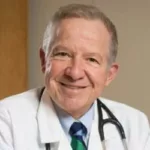 Michael Fiore, MD, MPH, MBA, is Hilldale Professor of Medicine and co-founder of the UW Center for Tobacco Research and Intervention. He is a nationally recognized expert on how to help patients quit smoking, providing expertise to morning news and the United States Senate. His research and policy work has focused on finding ways to intervene with patients who use tobacco, heading the concept of expanding the vital signs to include tobacco use status.
2008 - Barbara L. Wolfe, PhD
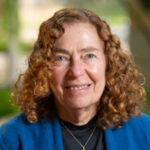 Barbara Wolfe, PhD, is Richard A. Easterlin Professor Emerita of Economics, Population Health Sciences, and Public Affairs as well as faculty affiliate at the Institute for Research on Poverty. Her research broadly focuses on poverty and health issues, including the effects of early childhood health on life-course health and the effects of subsidized housing on reducing risk-taking and improving school performance of adolescents.
2000 - Dennis G. Fryback, PhD
 Dennis G. Fryback, PhD, is a professor emeritus in population health sciences and industrial and systems engineering. He focused on issues with methodology underpinning medical decision making, cost-effectiveness analysis of health care interventions and health policy. He continues to conduct research using the data set he helped create, the National Health Measurement Study.
1995 - David A. Kindig, MD, PhD
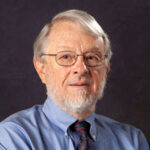 David A. Kindig, MD, PhD, is a professor emeritus of population health sciences, vice-chancellor emeritus for health sciences at UW–Madison and a former professor of preventive medicine. He helped develop County Health Rankings and was founding Co-Chair of the Institute of Medicine Roundtable on Population Health Improvement.
National Academy of Sciences
2021 - Robert Fettiplace, PhD
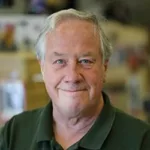
Robert Fettiplace, PhD, served as the Steenbock Professor of Neural & Behavioural Sciences for two decades, winning awards from Johns Hopkins and Columbia University. He studies the microscopic hair cells in the inner ear that allow us to detect and interpret sound.
1996 - James Dahlberg, PhD
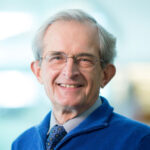 James Dahlberg, PhD, is an emeritus professor of biomolecular chemistry and the chancellor’s representative on the Board of Directors of the Morgridge Institute for Research. His research focuses on DNA and RNA. Dahlberg patented technology for identifying genetic mutations before founding the company Third Wave Technologies with other UW scientists.
National Academy of Engineering
2014 - Charles A. Mistretta, PhD
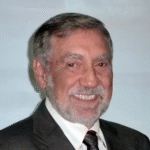 Charles A. Mistretta, PhD, is a professor emeritus of radiology, specifically imaging sciences. His research group was responsible for the development of digital subtraction angiography and has since added an additional dimension. His work has also resulted in the introduction of accelerated imaging techniques.
Kavli Prize
 The Kavli Prize honors scientists for breakthroughs in astrophysics, nanoscience, and neuroscience, recognizing research that significantly advances our understanding of the natural world.
2018 Neuroscience - Robert Fettiplace, PhD
Robert Fettiplace, PhD, served as the Steenbock Professor of Neural & Behavioural Sciences for two decades, winning awards from Johns Hopkins and Columbia University. He studies the microscopic hair cells in the inner ear that allow us to detect and interpret sound.
Louisa Gross Horwitz Prize
 The Louisa Gross Horwitz Prize is awarded by Columbia University for outstanding basic research in biology or biochemistry.
2020 - Robert Fettiplace, PhD
Robert Fettiplace, PhD, served as the Steenbock Professor of Neural & Behavioural Sciences for two decades, winning awards from Johns Hopkins and Columbia University. He studies the microscopic hair cells in the inner ear that allow us to detect and interpret sound.
Howard Hughes Medical Institute Investigators
 The HHMI Investigator Program offers generous, long-term support to established scientists whose research fundamentally changes our understanding of how biology works. The Institute works to drive scientific discovery forward by equipping outstanding researchers to make breakthrough discoveries.
2005 - Edwin R. Chapman, PhD
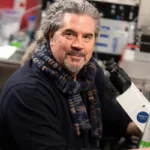 Edwin R. Chapman, PhD, is the Ricardo Miledi Professor of Neuroscience and director of the Quantitative Membrane Biophysics Program at UW–Madison. His research explores how calcium triggers the release of neurotransmitters.
American Academy of Arts and Sciences
 The American Academy of Arts and Sciences is both an honorary society and an independent research center. The primary criteria for candidates are excellence in the field and a record of continued accomplishment or the creation of a new field.
2012 - Robert Fettiplace, PhD
Robert Fettiplace, PhD, served as the Steenbock Professor of Neural & Behavioural Sciences for two decades, winning awards from Johns Hopkins and Columbia University. He studies the microscopic hair cells in the inner ear that allow us to detect and interpret sound.
1993 - James Dahlberg, PhD
James Dahlberg, PhD, is an emeritus professor of biomolecular chemistry and the chancellor’s representative on the Board of Directors of the Morgridge Institute for Research. His research focuses on DNA and RNA. Dahlberg patented technology for identifying genetic mutations before founding the company Third Wave Technologies with other UW scientists.
Guggenheim Fellowship
 The John Simon Guggenheim Memorial Foundation awards Guggenheim Fellowships to exceptional individuals in pursuit of scholarship in any field of knowledge and creation in any art form. The fellowship is a challenge to explore, take research to the next level, and accomplish extraordinary things.
2008 - Barbara L. Wolfe, PhD
Barbara Wolfe, PhD, is Richard A. Easterlin Professor Emerita of Economics, Population Health Sciences, and Public Affairs as well as faculty affiliate at the Institute for Research on Poverty. Her research broadly focuses on poverty and health issues, including the effects of early childhood health on life-course health and the effects of subsidized housing on reducing risk-taking and improving school performance of adolescents.
1983 - Richard R. Burgess, PhD
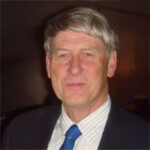 Richard Burgess, PhD, is the James D. Watson Professor Emeritus at the UW Carbone Cancer Center. One of the leading authorities on RNA polymerases and transcription factors, he discovered the first positive transcription factor, E. coli sigma factor, in 1968. His work focused on the protein machinery of RNA synthesis and on the understanding of how genes are regulated both in normal cells and in cancer cells.
American Society for Microbiology Eli Lilly and Company Research Award
 The Eli Lilly and Company Research Award is ASM’s oldest and most prestigious prize, first awarded in 1936 and discontinued after 2018. The prize rewarded fundamental research of unusual merit in microbiology or immunology by an individual earlier in their career, under the age of 45, giving special consideration to originality and independence of thought.
2015 - Vanessa Sperandio, PhD
 Vanessa Sperandio, PhD, is the Robert Turell Professor in infectious diseases and chair of the Department of Medical Microbiology and Immunology. She investigates how bacteria communicate with their hosts through chemical signals. Her research investigates how pathogens sense mammalian neurotransmitters to adapt, survive and continue causing disease. These insights inform new approaches to anti-virulence and antibacterial therapies.
Arnold and Mabel Beckman Scholars Program
 The Beckman Scholars Program supports the research activities of talented, full-time undergraduate students in the fields of chemistry, biochemistry, and the biological and medical sciences. Faculty listed here received the award during their undergraduate training.
2006 - Joshua Warner, MD, PhD, CIIP
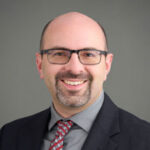 Joshua Warner, MD, PhD, CIIP, is an assistant professor of radiology specializing in abdominal imaging and intervention. He researches machine learning tools for radiology, which integrate traditional pixel-based imaging with data from electronic medical records to improve diagnosis.
1999 - John-Paul J. Yu, MD, PhD
John-Paul J. Yu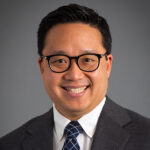 , MD, PhD, is an associate professor of radiology specializing in neuroradiology. He directs the radiology fellowship and is an associate director of the UW Medical Scientist Training Program and the UW Center for Health Disparities Research. His research focuses on gene-environment interactions on brain microstructure in certain diseases, diffusion weighted MRI in clinical research, and advanced imaging methods to detect neuroinflammation and synaptic loss.
David and Lucile Packard Fellowship for Science and Engineering
 The Packard Fellowships for Science and Engineering were created to give the nation’s most promising early‑career scientists and engineers the freedom to pursue bold, unconventional ideas.
2025 - Andrea Putnam, PhD
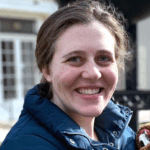 Andrea Putnam, PhD, is an assistant professor of biomolecular chemistry whose research focuses on how RNA and proteins assemble in a way that regulates gene expression during early development.
Humboldt Research Fellowship

The Humboldt Research Fellowship supports postdoctoral and experienced researchers with above-average qualifications from around the globe to conduct their own research in collaboration with a host at a German research institution.
2018 - Giulio Tononi, MD, PhD
Giulio Tononi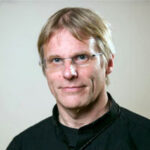 , MD, PhD, holds the David P. White Chair in Sleep Medicine and the Distinguished Chair in Consciousness Science. He is a neuroscientist and psychiatrist studying the biology of consciousness and its disorders, as well as the mechanisms and functions of sleep.
1994 - Richard Proctor, MD
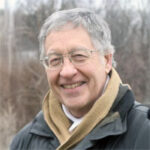 Richard Proctor, MD, is a professor emeritus of medicine and medical microbiology and immunology. His research investigates the interactions between bacteria and their hosts with a focus on how Staphylococcus aureus causes staph infection and the immune system’s response.
1987 - Meyer B. Jackson, PhD
Meyer B. Jackson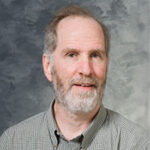 , PhD, is the Kenneth S. Cole Professor of Neuroscience. His research focuses on the biophysics of how the membranes of brain cells fuse and release neurotransmitters.
Robert Wood Johnson Health Policy Fellowship
 The Robert Wood Johnson Health Policy Fellowship offers mid-career professionals an opportunity to make an impact on federal health policy by serving as senior advisors to key health policy decision-makers in Washington, DC.
2022 - Elizabeth Cox, MD, PhD
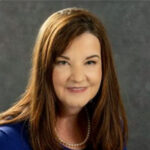 Elizabeth Cox, MD, PhD, is a former professor in the Department of Pediatrics and former director of the CDC-affiliated UW–Madison Prevention Research Center<. She led a program that assessed family-centered interventions to improve children’s health outcomes. Her trial successfully redesigned family-centered rounds in children’s hospitals to increase patient safety and family engagement.
2021 - Ann Sheehy, MD, MS
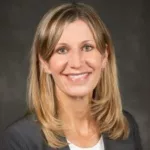 Ann Sheehy, MD, MS, was an associate professor of medicine specializing in hospital medicine when she served as a Robert Wood Johnson Foundation Health Policy Fellow for the class of 2021-22. Her policy research focused on Medicare hospital outpatient (observation) status. She currently serves as Chief Medical Officer for the U.S. Department of Health and Human Services.
2002 - Susan Goelzer, MD, MS, CPE
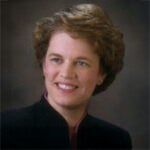 Susan Goelzer, MD, MS, CPE, is a professor emeritus in the Departments of Anesthesiology and Internal Medicine as well as associate dean for graduate medical education. Her research focused on how critically ill patients respond to medications. Goelzer is also a passionate mentor and public health advocate.