PA Electives
The Physician Assistant (PA) program offers elective opportunities for students interested in public health and global health. More information about electives is available for students upon admission.
Paths of Distinction in Public Health
If you are interested in adding a focus on public health to your required professional coursework, you may wish to pursue the Path of Distinction in Public Health (PoD). PoDs are offered in global health, rural health, tribal medicine and addiction medicine. To complete their selected PoD, students will take two 1-credit electives during the didactic phase, complete a focused clinical rotation during the clinical phase, and choose a capstone topic related to the PoD they have selected.
Global Health PoD
The Pathway of Distinction in Global Health prepares PA students to understand and address health challenges across various populations and settings, recognizing the interconnectedness of global and local health. Through interdisciplinary education, scholarly inquiry, community-engaged learning, and applied experiences, students develop the knowledge and skills to translate global health principles into locally relevant approaches that advance health, strengthen communities, and improve health outcomes.
Requirements
- PA 787: Seminar on Integrating Public Health into PA Practice (1 credit)
Provides an overview of public health, some of its current issues, and tools to help become engaged in the communities where clinical experiences and practice take place. - PA 622: Preparation for Interdisciplinary Health Care in Belize (1 credit)
An independent health care systems-focused opportunity open to PA, DNP, and PharmD students. The course will examine important and ever-changing topics in global health care. The focus of this course will be the more remote, indigenous populations of Belize, their current health care system, and access to care. - Focused Clinical Experience – 10-Day Belize Trip or four-week clinical rotation at Hillside Clinic
- Global Health-Focused Capstone Project – Research topic literature review
“If you’re curious about the origins of medicine and how it can be practiced from entirely different cultural perspectives, this is the program for you. Go for it if you want to broaden your horizons and understand the realities that people in other parts of the world face.”
–Daria Golosova, PA ‘27
Rural Health PoD
The Pathway of Distinction in Rural Health prepares PA students to improve population health in rural and medically underserved communities. Through interdisciplinary education, scholarly inquiry, and community-engaged learning, students develop the knowledge and skills to address rural health needs, strengthen community-based care and promote sustainable health outcomes.
Requirements
- PA 787: Seminar on Integrating Public Health into PA Practice (1 credit)
Provides an overview of public health, some of its current issues and tools to help become engaged in the communities where clinical experiences and practice take place. - Med SC 740: Overview of Rural Health (1 credit)
Introduce students to the rural community, its people, the health care issues they face, and the practice of medicine in rural communities. Key concepts of rural medicine, including health resources, access to care, injuries and illnesses associated with farming and agri-business, safety and protective equipment, and health policies. Preparation for clinical training and work in rural areas of Wisconsin. - Focused Clinical Experience – Rural Wisconsin
- Rural Health-Focused Capstone Project – Research topic literature review
“I would recommend doing the Rural Health PoD for any student who is interested in contributing to increased health care access. It presents an opportunity to learn about how health care can look in rural areas and provides additional mentorship, both of which are quite valuable.”
–Abby Jackson, PA ‘27
Tribal Medicine PoD
The Pathway of Distinction in Tribal Health prepares PA students to provide effective, community-engaged care in partnership with tribal nations and Native American communities. Through interdisciplinary education, scholarly inquiry, and experiential learning, students develop the knowledge and skills to understand the historical, social, and structural determinants of health affecting Native communities and to advance health, strengthen partnerships, and support tribal sovereignty and self-determined approaches to health and well-being.
Requirements
- PA 787: Seminar on Integrating Public Health into PA Practice (1 credit)
Provides an overview of public health, some of its current issues, and tools to help become engaged in the communities where clinical experiences and practice take place. - Med SC-M 930: American Indian Health, History & Tribal Governance (1 credit)
An inter-professional introduction on foundational knowledge regarding the history, structures and key health priorities of Wisconsin tribal nations delivered by a wide range of faculty and guest experts. - Focused Clinical Experience with a Wisconsin Tribal Clinic
- Tribal Medicine-Focused Capstone Project – Research topic literature review
“The Tribal Medicine PoD is an excellent opportunity for anyone interested in learning about AI/AN healthcare and culture, regardless of background or prior experience!”
–Linsey Otterson PA ‘26
Addiction Medicine PoD
The Pathway of Distinction in Addiction Medicine prepares PA students to provide evidence-based, compassionate, and person-centered care for individuals and communities affected by substance use and addiction. Through interdisciplinary education, scholarly inquiry, and experiential learning, students develop the knowledge and skills to understand addiction as a chronic, treatable health condition, address its social and structural determinants, reduce stigma, and advance access to prevention, treatment, harm reduction, and recovery-oriented care.
Requirements
- PA 787: Seminar on Integrating Public Health into PA Practice (1 credit)
Provides an overview of public health, some of its current issues, and tools to help become engaged in the communities where clinical experiences and practice take place. - PA 788: Integrating Addiction Medicine into PA Practice (1 credit)
Introduce students to addiction medicine by developing understanding of life-saving harm reduction measures and community resources, directly engaging with members of the community and professionals in the field of Addiction Medicine, cultivating a heightened level of proficiency in addressing various substance use disorders, and augmenting comprehension and treatment strategies for co-morbidities associated with substance use disorders. - Focused Clinical Experience – Hospital or clinic with addiction services
- Addiction Medicine-Focused Capstone Project – Research topic literature review
“Even if you don’t have lived experience with a substance use disorder, you can still provide valuable, empathetic care to patients who do. You should approach all patient interactions with compassion, but you may discover an even larger spot in your heart for patients who face the struggles of substance use disorders.”
–Devann Harris Loveless, PA ‘27
International Health Opportunities
Students enrolled in the PA program may participate in international health opportunities. The university’s health professions’ programs have an Office of Global Health for coordination of health experiences available at UW–Madison. In order to participate in a PA program-sponsored international activity at UW–Madison, the student will need to complete an additional one-credit course on various international health care topics prior to travel.
The UW–Madison PA program currently has two international opportunities available to our PA students. Both are in the Central American country of Belize and allow students to experience community health in a different sociocultural environment.
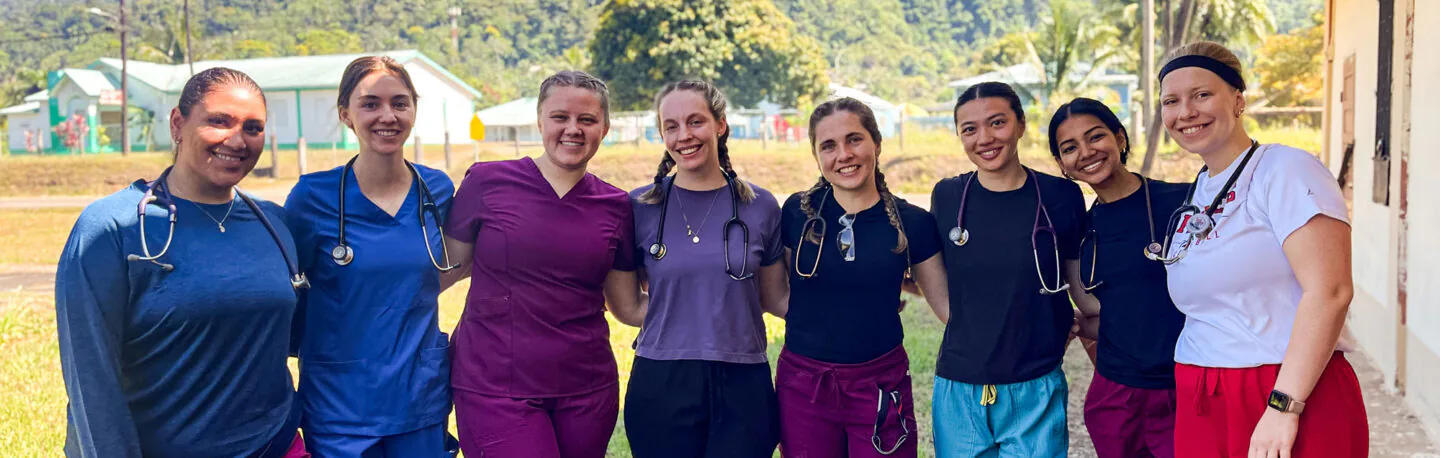
The first international opportunity is a one-week interdisciplinary service-learning trip with fellow classmates and Doctor of Pharmacy students to the medically underserved rural areas around Independence, Belize, located in the Stann Creek District of southern Belize. We partner with Peacework and the Belize Family Life Association for this international experience, which occurs each May, at the end of didactic training. During this one-week, faculty-led experience, students visit small rural villages to provide medical care to remote locations and cervical cancer screening to those lacking this preventive testing. The student cost for this experience is approximately $2,000, plus airfare. This cost includes all in-country meals, transportation while in Belize, and in-country lodging. Students are also required to purchase international travel insurance (approximately $20) through the UW–Madison Business Office. Students will have opportunities to fundraise throughout the didactic year to offset their personal expenses.
The second international opportunity occurs as a four-week elective rotation in March of the clinical year of training through Hillside Health Care International in Belize. This preceptorship opportunity includes staffing a clinic in an East Indian township near the Garifuna city of Punta Gorda and providing mobile medical care to surrounding Mayan villages. Only a handful of students are selected for this annual international experience, which requires a letter of intent. Students completing a dual-degree (MPAS/MPH) or the Global Health Pathway of Distinction will be given preference for this elective rotation. The cost for this four-week experience is approximately $2,300, plus airfare, which includes in-country meals and lodging. Students are also required to purchase international travel insurance (approximately $40) through the UW–Madison Business Office.