

How AI is advancing medical research
Able to absorb, examine and analyze staggering amounts of data, artificial intelligence (AI) helps medical researchers identify disease patterns and predict patient outcomes.

Preparing medical residents to practice lifestyle medicine
Americans are getting sicker earlier in life. More than half of young adults aged 18-34 years report at least one chronic condition, such as obesity or diabetes, and adults in midlife are increasingly likely to have two or more.
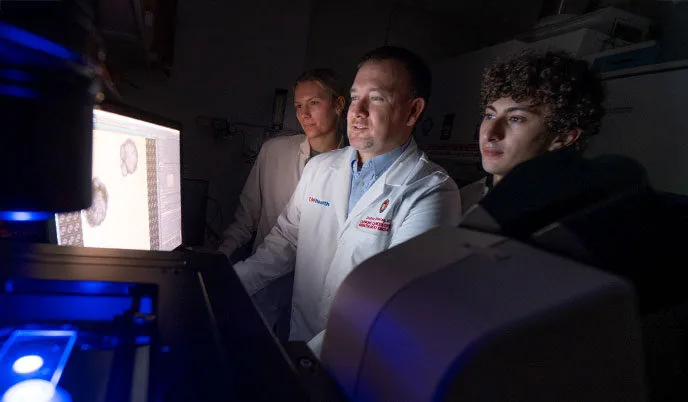
UW–Madison and Immuto Scientific to collaborate on novel cancer target discovery
University of Wisconsin–Madison and Immuto Scientific have officially entered into a collaborative agreement to identify disease-specific, novel therapeutic targets in colorectal cancer.
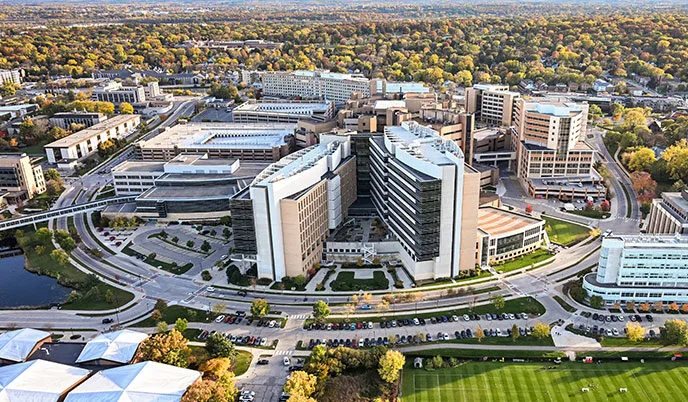
Top ten research stories for 2025
The numbers are in — the end-of-year web analytics, that is — and they show robust interest in research at the UW School of Medicine and Public Health! In 2025, articles about new discoveries and one-on-one interviews with researchers were among the most-viewed stories of the year.

AI technology for clinical documentation aids efficiency and reduces burnout
A randomized trial showed that ambient AI notetaking can help reduce health care practitioner burnout by reducing time spent documenting clinical notes.

Improv class for health professions students builds communication skills
An innovative approach borrowed from the performing arts is helping health professions students at the University of Wisconsin School of Medicine and Public Health strengthen their ability to engage in active listening and think on their feet, which are key skills they will need throughout their careers.

UW researchers tackle diabetes from multiple angles
Diabetes is a growing epidemic in Wisconsin. Its rise has been linked to limited access to healthy food and health care in some communities, lower levels of physical activity, and a rise in obesity, among other factors.
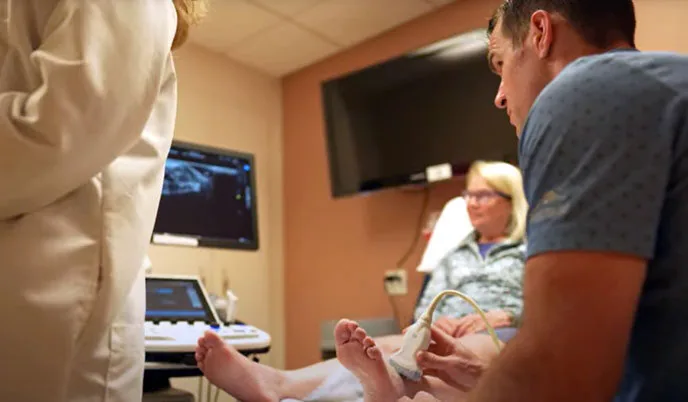
Improving rural access to rheumatology care
A new collaborative training program, known as STARS-R aims to help rural primary care physicians build skills in managing existing patients with rheumatologic conditions by pairing them with professors of rheumatology from the UW School of Medicine and Public Health.

Alzheimer’s blood test validated with help from UW–Madison data
The first blood plasma test to identify hallmarks of Alzheimer’s disease was cleared in May by the U.S. Food and Drug Administration (FDA), and University of Wisconsin researchers provided a portion of the samples used in the clinical validation test.
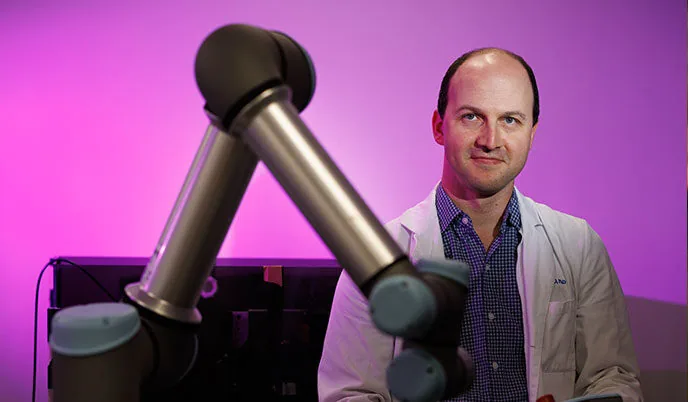
Q&A: Daniel Buckland on space medicine and medical technology
A space medicine fellowship, robots in the emergency room, and machine learning tools to improve clinical workflow are among the innovations Dr. Daniel Buckland, an associate professor in the BerbeeWalsh Department of Emergency Medicine, intends to explore within the University of Wisconsin School of Medicine and Public Health and UW’s College of Engineering, where he holds an affiliate governance appointment.

Schwarze named to National Academy of Medicine
Dr. Margaret “Gretchen” Schwarze, professor of surgery at the University of Wisconsin School of Medicine and Public Health, was recently elected as a member of the National Academy of Medicine for her pioneering work that has transformed how surgeons communicate with patients about major treatment decisions and informed consent for surgery.

An early roadmap to preventing a devastating childhood brain cancer
Stopping genetic mutations that cause a rare but aggressive brain tumor in children may be the key to preventing the cancer’s development in the first place, according to researchers in the UW School of Medicine and Public Health.