The month of March also includes an awareness day, March 21, for anal cancer — which oncologists consider distinct from colorectal cancer and is much rarer and underresearched. Rates of anal cancer have also been rising for years and many are unaware of the strong connection to HPV, the most commonly sexually transmitted infection.
We asked eight researchers at the University of Wisconsin School of Medicine and Public Health to describe the scope of their programs and what drives them.
Noelle LoConte, MD
Associate professor of medicine
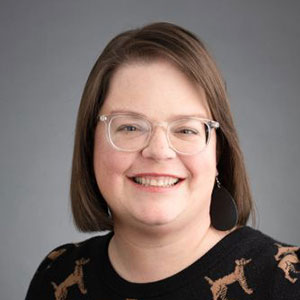
Research focus: Dr. Noelle LoConte, an oncologist treating gastrointestinal cancer, focuses on colorectal cancer prevention, early detection and screening. Her current work uses focus groups to understand the perceptions of different colon cancer screening methods from the patient and provider perspective.
Research philosophy: Passed down from UW cancer center’s founder Dr. Paul Carbone, LoConte learned “The best cancer is no cancer,” leading her to focus on prevention and screening. Colorectal cancer is unique in that a diagnostic tool, colonoscopy, can also be used for prevention.
Major impact: LoConte works to change policy around alcohol and cancer, taking lead in writing the American Society of Clinical Oncology’s policy statement, leading to the 2025 Surgeon General’s Advisory on alcohol and cancer risk. Alcohol consumption is a leading preventable cause of cancer, and colon and rectal cancers are two of the seven known alcohol-related cancers.
Dustin Deming, MD
Professor of medicine
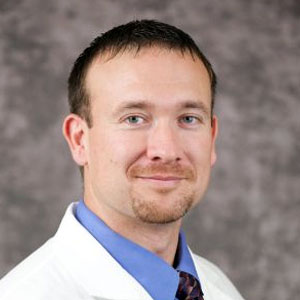
Research focus: A physician-scientist who holds several leadership roles at the UW Carbone Cancer Center and the William S. Middleton Memorial Hospital, Dr. Dustin Deming’s research focuses on precision medicine for colorectal cancer. His lab grows patient-derived cancer organoids, which he likens to cancer “jello molds,” allowing researchers to screen drugs on a patient’s actual cancer cells.
What inspires him: “Two weeks into my first faculty position, I was diagnosed with stage 3 rectal cancer,” Deming said. “I underwent chemotherapy, radiation, surgery, all those things alongside my patients. I learned a lot about being a doctor and what it means to hear that diagnosis through my own experience. I could not be more fueled by that.” Deming has been cancer-free for several years.
Major breakthrough: Deming’s lab discovered that a protein called versican can turn off immune cells that would otherwise destroy cancer. His team recently published a phase 1b clinical trial where versican activated immune cell function and improved clinical outcomes.
Collaboration: “None of us do this alone — we’re doing all of this work as a team,” said Deming. “At the pace we’re going, we’re getting new therapies every six months or so, which is amazing for patients.” Deming also conducts research in collaboration with biohealth industry partners.
Perry J. Pickhardt, MD
John R. Cameron Professor of Radiology and Medical Physics
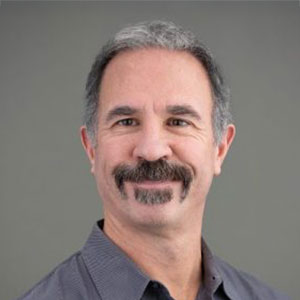
Research focus: As a radiologist and chief of gastrointestinal imaging, Dr. Perry J. Pickhardt’s research focuses on computed tomography (CT) colonography, or virtual colonoscopy, a noninvasive imaging exam that uses CT scans to examine the colon for polyps and cancer without sedation. He also studies “opportunistic screening,” using CT scans patients received to detect other health conditions.
Major breakthrough: Pickhardt is one of the pioneers of virtual colonoscopy, establishing UW as the “center of the universe” for it and publishing over 500 peer-reviewed research papers on screening.
Benefits of virtual colonoscopy over traditional colonoscopy include no needles, no sedation, no recovery time and a track record of zero complications. The method provides additional insights, serving as an osteoporosis scan and detecting heart issues.
What drives him: “The rates of colon cancer in younger people are exploding. It’s sad because I see it every week — a new patient presenting with advanced colorectal cancer under the age of 50, often in their 30s or even 20s,” Pickhardt said. “Virtual colonoscopy is well suited for this younger population because many of them are more willing to have this preventative test.”
Evie Carchman, MD
Associate professor of surgery
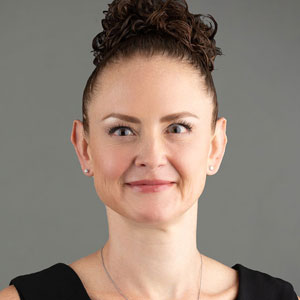
Research focus: Dr. Carchman is a colon and rectal cancer surgeon whose research focuses on anal cancer prevention and treatment, using cell and mouse models to test novel therapeutics and diagnostic tests. She also leads clinical trials to investigate treatments for these diseases.
What inspires her: “It came down to the fact that there wasn’t a lot of research being done on anal cancer,” Carchman said. “We see a fair number of patients in clinical practice that have been treated for anal cancer, and even though they’re cured most of the time, they live with long-term effects.”
Patient-centered philosophy: “It would be easy in the lab to do systemic therapy, where you just inject the treatment into mice, but patients aren’t going to want injections to treat a precancerous lesion,” Carchman said. “I tried to develop more realistic treatments — a topical therapy that doesn’t cause irritation, doesn’t need to be applied four times a day. I put myself in the position of the patient.”
Current work: Carchman is currently leading a first-in-human clinical trial testing whether a topical drug called saquinavir can prevent anal cancer in high-risk patients. The drug, originally used to treat HIV, clears abnormal proteins produced by HPV before they turn into cancer — HPV is associated with 95% of anal cancers. Five of 12 patients have completed the phase one trial with no tolerability issues. Carchman also works on HPV prevention. She wants people to know that they can still receive the HPV vaccine through age 45 and encourages patients to discuss with their doctor.
Nataliya Uboha, MD, PhD
Associate professor of medicine
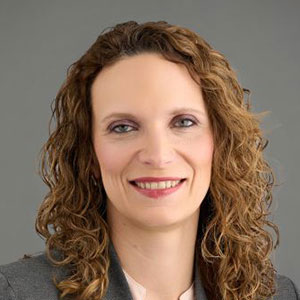
Research focus: As a medical oncologist treating gastrointestinal (GI) cancers, Dr. Nataliya Uboha’s research focuses on evaluating new treatments for patients with GI cancers through clinical trials. She leads the early phase oncology therapeutics program, which is the largest clinical trials program focusing on first-in-human studies, or bringing new agents into clinical practice.
Current work: Many new agents being developed are targeted drugs tailored to particular genetic alterations present in cancers, rather than broad-spectrum chemotherapy which causes toxicity because it affects both healthy cells and cancer cells. Many colorectal cancers have mutations in a gene called KRAS, and Uboha runs trials at UW that target this mutation.
Cross institutional collaboration: Uboha co-chairs the Big Ten Cancer Research Consortium’s GI section and leads national efforts through oncology networks involving thousands of academic and community-based cancer centers. These groups allow researchers across the country to collaborate on clinical trials.
Why National Institutes of Health funding matters: “A lot of this novel work comes through our labs that get National Cancer Institute funding. New pathways, new targets are being discovered, and new potential agents are being validated in our labs. So the funding from the NCI is absolutely instrumental to keep moving the science forward.”
Shaneda Warren Andersen, MS, PhD
Associate professor of population health sciences
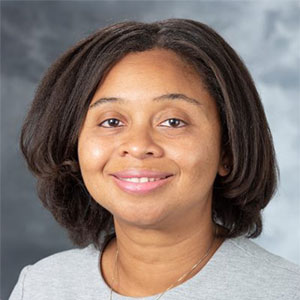
Research focus: Dr. Shaneda Warren Andersen is a cancer epidemiologist who studies colorectal cancer risk and outcomes from prevention to survivorship. Her approach is unique in combining genetic and social factors. Andersen examines the impact of molecular-level tumor characteristics alongside access to health care, modifiable behaviors and social determinants.
Research philosophy: “One way I can contribute to lowering the burden of cancer is to focus on populations that have the worst outcomes,” Andersen said. “By focusing on people with the most need, we can improve the overall health of society.”
Current work: Andersen is leading an NIH-funded study examining how and why mortality rates for colorectal cancer differ markedly across populations. Key to this is understanding what biological differences in tumor characteristics might drive the 40% higher mortality rate for colorectal cancer in the non-Hispanic Black population.
Diabetes and colorectal cancer: Andersen’s research found that diabetes is associated with increased colorectal cancer risk, likely due to metabolic dysregulation. But among people who were screened with colonoscopy, this relationship disappeared — an important public health message about the power of colonoscopy to remove precancerous polyps before they become cancer.
Jeremy Kratz, MD
Assistant professor of medicine
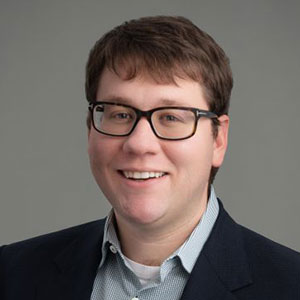
Research focus: Dr. Jeremy Kratz’s research focuses on the “marker of the patient that walks through the door,” using patient-derived organoids to identify vulnerabilities and develop targeted treatments. His lab uses gene editing to analyze how cancers become resistant to drugs, like predicting the cancer’s next chess move. He is also focused on discovering combination therapies.
What inspires him: “My mom had cancer when I was really young, and when you’re faced with anxiety or stress in life, you can either allow that to consume you, or you can respond,” Kratz said. “When I was three, I heard some worry in the voice of my dad, and ever since that point, I found that oncology is a way to respond to that.”
Major impact: Through his work at the Veterans Affairs Administration’s National Precision Oncology Program, Kratz helped establish next-generation genetic sequencing for every veteran with advanced colon cancer, giving them access to precision diagnostics that identify exactly what’s driving their disease.
Research philosophy: “This is not about slowing the growth of cancer. We need to arrest it, ” Kratz said.
Jennifer Weiss, MD, MS
Professor of medicine
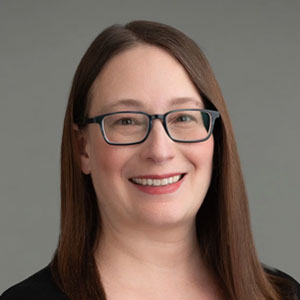
Clinical research focus: As the medical director of UW Health’s gastroenterology genetics clinic, Dr. Jennifer Weiss sees patients at high risk for colon cancer due to inherited disease. Her research focuses on increasing colorectal cancer screening rates and improving colonoscopy quality across all risk levels, from average-risk patients to people with inherited syndromes like Lynch syndrome, the most common hereditary colon cancer syndrome.
Patients travel from across Wisconsin, northern Illinois, Minnesota, and Iowa to visit the clinic. Weiss and her team review family history, assess risk, discuss genetic testing options and insurance coverage, and can perform testing the same day. They follow up with results virtually, so patients get everything in one visit and don’t have to return.
What inspires her: “We have this powerful tool of a colonoscopy that can remove precancerous polyps before they even turn into cancer. I wanted to make sure that everyone had access to this service,” Weiss said. “It goes back to the Wisconsin Idea. Everything that we do here, everyone wants to implement and share with the rest of Wisconsin and beyond.”
Why it matters: “Colorectal cancer is the most preventable yet least prevented cancer,” Weiss said. “It’s one of the only cancers where screening can remove precancerous lesions. A colonoscopy can not only diagnose cancer early, but stop it from ever developing. Yet Wisconsin’s screening rate sits at 74%, leaving one in four people unscreened.”
– Author Mary Bosch is a 2025–26 science communications intern at the School of Medicine and Public Health