Macrophages seem like ideal weapons to attack cancer, because these large white blood cells surround tumors and — as their name suggests, from the Greek for “big eater” — they exist to digest cellular waste, infection, and damaged and dead cells.
Unfortunately, macrophages within solid tumors can instead promote growth of tumors, including ovarian cancer and neuroblastoma. This is because cancer cells can protect themselves from macrophages by displaying a “don’t eat me” signal that tells macrophages not to attack or destroy tumor cells.
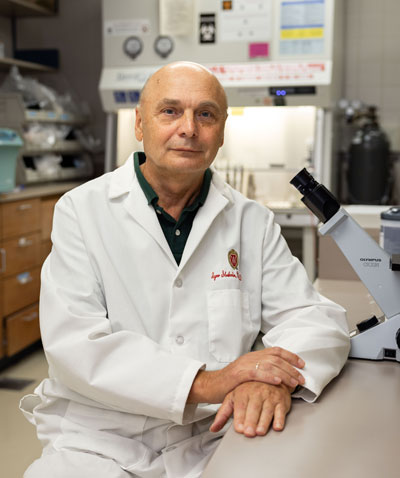
Now, a team of researchers from the University of Wisconsin School of Medicine and Public Health combined stem cell and genetic engineering technologies to create macrophages lacking the “don’t eat me” receptor, allowing them to attack tumors and to continue ingesting cancer cells long after natural macrophages were exhausted, according to Dr. Igor Slukvin, professor of pathology and laboratory medicine at the school, whose lab conducted the research.
Portia Smith
“This work shows that removing the ‘don’t eat me’ brake makes macrophages better not only at recognizing and destroying cancer cells but also at staying active even after repeated encounters with tumors,” he said. “Using induced pluripotent stem cells to produce these macrophages provides a renewable platform for developing new treatments for solid tumors.”
The research published in the journal Molecular Therapy: Oncology was led by Portia Smith, a former graduate student in Slukvin’s laboratory and a current postdoctoral researcher in the laboratory of Dr. Christian Capitini, director, University of Wisconsin Carbone Cancer Center.
Igor Slukvin
Photo by Sirtaj Grewal/Media Solutions
“We have a promising approach that works well in the lab, but more research is needed to improve its effectiveness and determine whether it can be safely advanced to patients,” she said.
Cancer researchers have known that tumors that display a checkpoint molecule called CD47, the “don’t eat me” signal, can evade the innate immune system because CD47 acts as a marker of self, telling immune cells not to destroy the cells that harbor it. Using CD47-blocking drugs can cause severe anemia because CD47 also protects healthy red blood cells from attack. As an alternative approach, the research team engineered a macrophage lacking the SIRPa receptor, which recognizes the “don’t eat me” signal from CD47. They began with human induced pluripotent stem cells, or iPSCs, which can be made from skin biopsy and induced to become virtually any type of cell. The researchers used CRISPR gene editing technology to knock out SIRPa in iPSCs and grew them into macrophages, which they called iMacs.
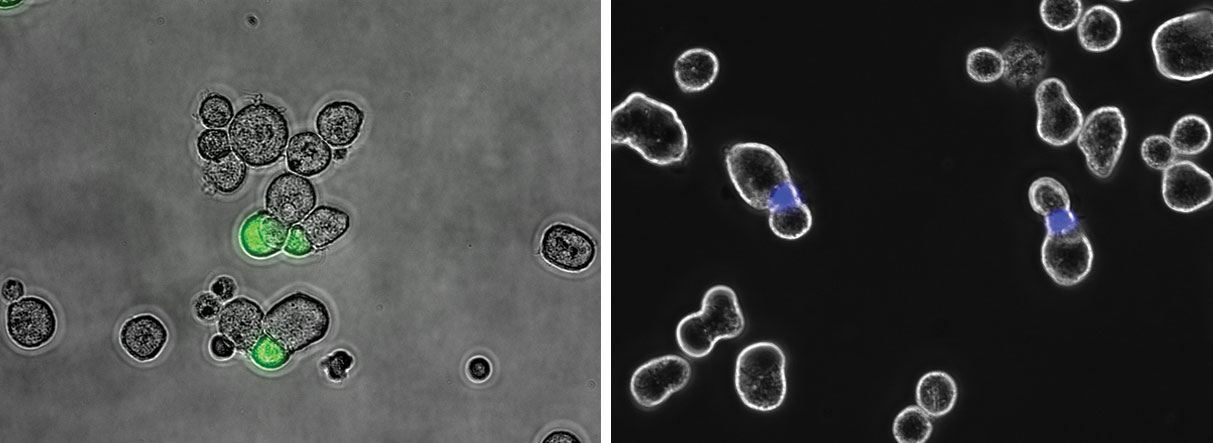
In one series of tests, they combined the engineered macrophages with a monoclonal antibody drug that targets cancers expressing HER2+, a protein involved in a specific type of breast cancer. The engineered macrophages engulfed and killed cancer cells far more effectively, but only when the monoclonal antibody drugs were present. This provides important proof of concept for safety because it demonstrates the macrophages don’t indiscriminately attack cells displaying CD47. This approach led to killing up to 90% of ovarian cancer cells and about 50% of melanoma cells in the laboratory dish.
Then, they armed the macrophages with another cancer-fighting weapon: a chimeric antigen receptor, or CAR, that targets GD2, a molecule found at high levels on the surface of neuroblastoma and melanoma. This is the approach currently used in clinics to create CAR-T cells to fight blood cancers, but in this study the researchers were using macrophages instead of T cells.
Importantly, removing the SIRPa also solved the problem of immune system exhaustion. Normal macrophages show an initial burst of cancer-fighting activity but become less able to attack because over time they lose the surface receptors that recognize the antibodies on the cancer cells. But the SIRPa-knockout macrophages retained their receptors through multiple rounds of tests, allowing them to continuously attack tumors. The CAR versions also kept their receptors and stayed vigorous.
From left, genetically engineered macrophages (gray) are shown eating and destroying ovarian cancer cells (green) and melanoma skin cancer cells (blue).
Results in mice with human cancer tumors were more modest. The knockout macrophages combined with the monoclonal antibody improved ovarian cancer survival time and shrunk tumors, but were not curative. The CAR-macrophages were able to slow neuroblastoma growth at first, but the tumors caught up eventually.
“So far, iMacs were tested in mice that lack a human immune system, and further testing of iMacs in humanized mouse models would be necessary to fully elucidate their utility for cancer immunotherapy because interaction with human T cells may be critical to unleash the full cancer-fighting potential of iMacs,” Slukvin said.
Other members of the research team include Md Ehsanul Kabir, Jue Zhang, John Maufort, Matthew Forsberg, Divine Sedzro, Mark Berres and James Thomson, all of the University of Wisconsin–Madison.
The research was supported by grants from the St. Baldrick’s Foundation, the MACC fund and federal grants NIH/NHLBI R01 HL142665 and NIH/NHLBI U01 HL134655.