2026 Graduate Profiles
At the UW School of Medicine and Public Health, our vision of “Healthy People, Healthy Communities” is the thread that connects every classroom, clinic and community partnership. It challenges us to think boldly, act with empathy, and pursue knowledge that improves lives. It is the lens through which our students discover who they are — and who they aspire to become.
As they prepare for the next chapter, six students from the Class of 2026 — spanning five health professions programs and one doctoral program — share how this vision shaped their paths and passions.
Ashley Benitez
Master of Public Health, UW School of Medicine and Public Health
BS, Neurobiology, University of Wisconsin–Madison
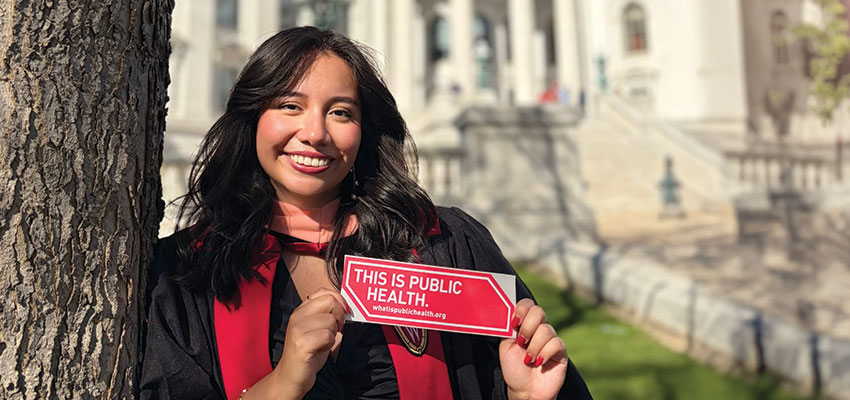
For Ashley, health does not begin in a clinic or hospital, but is shaped long before that by the realities of people’s everyday lives. She approaches the school’s vision of Healthy People, Healthy Communities as the foundation of public health, recognizing that you cannot have healthy people without healthy communities.
In the Master of Public Health program, Ashley consistently connects classroom learning to what is happening in the world. She thinks about health not simply as an outcome, but as something built or limited by systems. Impact, in her view, is not measured by findings alone, but by whether those findings change circumstances for the communities they are meant to serve.
Ashley describes public health as everything around us. “It’s the information people can access, the language it is delivered in, whether people trust the system, and whether care is within reach at all. These conditions shape who gets sick in the first place, who receives care, and who is left behind,” she said.
Ashley grounds her work in connection, trust, and whether people feel seen and understood within the systems meant to support their health. As a Latina, she has seen firsthand how linguistic and cultural knowledge can make public health measures more effective.
Beyond coursework, Ashley strengthens the MPH community through her leadership in the MPH Student Organization and by mentoring prospective students as they explore the program. Working alongside faculty and students addressing real‑world public health challenges at UW has also pushed her to think bigger about what research can do and who it should serve.
This fall, Ashley will continue her training at UW and will pursue a PhD in Population Health Sciences. She chose this path because she wants to help design systems that work for the people they are meant to serve and to be part of meaningful change.
Jack Shireman
PhD in Neuroscience, UW School of Medicine and Public Health
BS, Neurobiology, University of Wisconsin–Madison
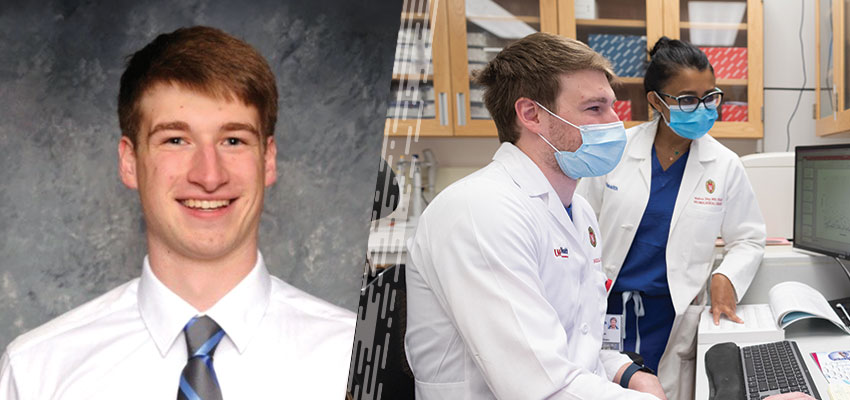
Jack has long been driven to better understand brain tumors and how they can be treated more effectively. That interest shaped his undergraduate studies in neurobiology at UW–Madison, his years in research labs at Northwestern, and ultimately his decision to return to UW to pursue a doctorate in neuroscience.
When Jack talks about the UW School of Medicine and Public Health, he points to how closely science, medicine and community are linked. “When I think about the mission of UW, I think about how UW has taught me not only about the basic science behind health but also how the health of a whole person and community is intertwined,” he said.
That connection became personal long before graduate school. As a teenager, Jack received treatment for a brain tumor from pediatric oncology faculty who cared for him at American Family Children’s Hospital. Experiencing care at UW, where he now trains, helped shape his commitment to brain tumor research and his goal of becoming a physician‑scientist.
Today, Jack studies brain tumor immunotherapy, using translational models and patient data to analyze treatment resistance and improve future therapies. He points to the UW environment, where clinicians and researchers collaborate closely from the lab to the patient bedside. That experience was reinforced by his own mentor, Dr. Mahua Dey, who treats patients with brain tumors while leading a lab focused on those same diseases. Beyond the lab, Jack is active in sharing science with broader audiences—from presenting research at the Wisconsin State Capitol to tutoring UW students and participating in community outreach that makes complex research more accessible.
This fall, Jack will start medical school at Medical College of Wisconsin, continuing his training as a physician-scientist. For him, advancing brain tumor research is not just about discovery, but about contributing to healthier people and healthier communities.
Ide Ikhumhen
Doctor of Physical Therapy | Master of Public Health, UW School of Medicine and Public Health
BS, Kinesiology, University of Wisconsin–Madison
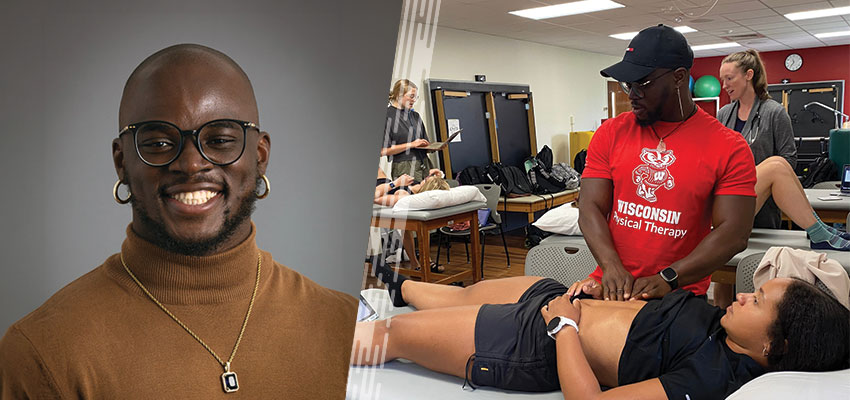
The values that shape how Ide approaches health–education, service and community — were formed early while growing up in Nigeria and carried forward when immigrating with family to the United States. Rooted in service to others, those values continue to guide Ide’s understanding of health and care.
In reflecting on the UW School of Medicine and Public Health’s vision of Healthy People, Healthy Communities, Ide describes it as an intersectional approach to health, one that recognizes how closely individual health and community conditions are connected. Through the pursuit of dual degrees in physical therapy and public health, that idea became tangible in practice. Ide was able to draw from UW’s strength in combining clinical experience and public health training to bridge individual care and population‑level thinking.
“As a dual degree Doctor of Physical Therapy and Master of Public Health student, I engaged deeply with musculoskeletal science and rehabilitation principles while also learning to think systemically about health,” Ide said.
Clinical training was also inspiring. “Equally meaningful were my clinical rotations and volunteer experiences, where I learned directly from patients and community members. Working with patients taught me how to navigate difficult conversations while still making rehabilitation approachable and empowering.”
“I see my role extending beyond individual treatment to advocating for inclusive spaces, community resources, and culturally responsive care. Healthy people and healthy communities are not separate goals. Together, they shape the conditions that allow people to heal, move, and thrive.”
Obie Oniah
Doctor of Medicine | UW School of Medicine and Public Health
BS Neurobiology, University of Wisconsin–Madison
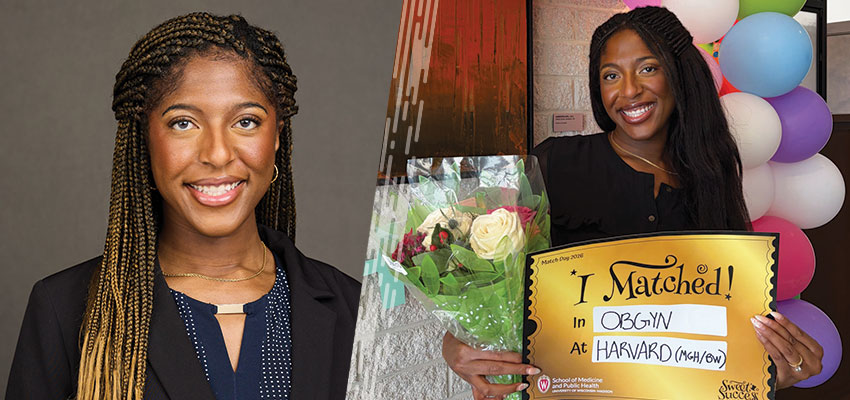
Obie’s approach to medicine and health care has its roots in community‑based care. She completed her undergraduate studies at UW–Madison, pairing coursework with research and volunteer work aimed at reducing health care disparities, then stayed in Madison to work as a certified professional doula, specializing in support for Black mothers through pregnancy and childbirth. When medical school became her next step, UW was her top choice.
Through her medical education at the UW School of Medicine and Public Health, Obie describes how the integration of public health into the curriculum, along with her lived experiences, broadened her understanding of the factors that influence health. Reflecting on the school’s vision of Healthy People, Healthy Communities, she notes that “a person’s health is not simply captured in an exam room, but within the community they come from. This awareness of public health concerns, health equity and other influencing factors allows me to care for patients more holistically,” she said. Obie believes taking care of communities is a critical part of caring for patients.
By remaining in Madison throughout her educational path, Obie has sustained the research, volunteer and community‑based efforts she began as an undergraduate. The next phase of her career will take her to Cambridge, Massachusetts, where she will pursue her residency training in obstetrics and gynecology at Mass General Brigham, a main teaching hospital of Harvard. She plans to remain engaged in community‑based research and work focused on improving maternal and infant health outcomes, carrying forward a perspective shaped in Madison through years of connection to community, public health and equity‑centered care.
Kameron Gottlieb
Master of Physician Assistant Studies, UW School of Medicine and Public Health
BS, Molecular Biology, University of Denver
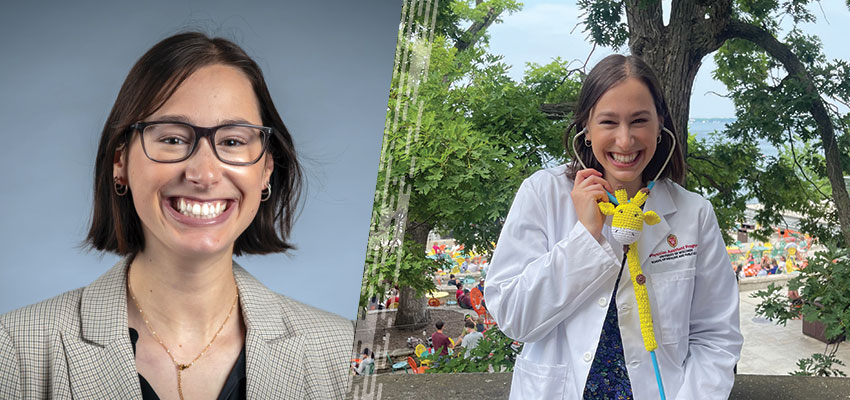
From an early age, Kameron was driven by curiosity. Asking “why” came naturally, and science and research first fueled her desire to understand the world. As her education progressed, coursework in anatomy and physiology, along with the opportunity to study and live abroad, where she gained insight into systemic barriers facing families seeking asylum, expanded her worldview and clarified the path she wanted to pursue.
Kameron came to see medicine as the intersection of those interests and her desire to partner with patients and their families. She chose the physician assistant program at UW as a way to bring those values together, equipping her to address health care gaps through holistic, relationship‑based care, particularly in primary care settings serving underserved communities.
At the UW School of Medicine and Public Health, one place those values took shape was MEDiC, a student‑led organization that operates free health clinics across Madison. Through sustained leadership and service at the clinic, Kameron saw how the work reflected the school’s vision of Healthy People, Healthy Communities. “Through MEDiC, I learned that true patient-centered care extends beyond symptoms and diagnoses, encompassing the broader social contexts surrounding patients,” she said. She also helped start a Medical Spanish Interest Group, extending her commitment to improving communication and access for patients. These experiences reinforced that patient‑centered care extends beyond symptoms and diagnoses to listening with humility and compassion and meeting patients where they are in their lives.
Kameron will soon begin her work as a physician assistant at Access Community Health Centers’ Wingra Family Medical Center, a federally qualified health center that operates in partnership with the UW Department of Family Medicine and Community Health. She is grateful for the opportunity to walk alongside patients on their health journeys while continuing to serve the community.
Tonisha Atkins
Master of Genetic Counselor Studies | Master of Public Health, UW School of Medicine and Public Health
BA, Spanish and International Studies, University of Wisconsin-La Crosse
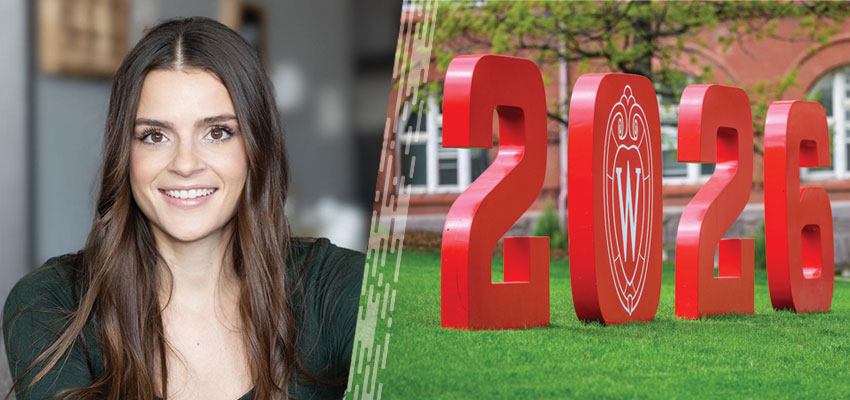
Tonisha’s path began at the intersection of people and possibility. With a background in education and social work and a deep love for science, she was drawn to work that combined technical knowledge with human connection. She found meaning in walking alongside people during difficult moments and pursued a path that allowed her to balance both.
That led her to the UW School of Medicine and Public Health and the master’s program in genetic counseling. With the option to pursue a dual degree by also completing the Master of Public Health program, Tonisha saw an opportunity to deepen her understanding of the structural factors, public health systems and community‑level influences that shape access to care.
When reflecting on the dual degree, Tonisha highlights the intersection of the individual and the community, not only in how systems influence access, but in how genetic information can affect extended families across generations. To her, the school’s vision of Healthy People, Healthy Communities means ensuring patients and communities have the information and resources they need to navigate complex and often difficult decisions.
“Through my genetic counseling training, I worked closely with patients during moments of uncertainty, learning how to communicate complex information clearly while honoring the perspectives families bring to their care,” she said. She also completed a leadership program focused on improving services and supports for children with, or at risk for, neurodevelopmental disabilities and contributed to public health efforts connected to Wisconsin’s newborn screening program, including research on family experiences as new screening practices were adopted. “Working alongside trainees from multiple disciplines reinforced that the most effective solutions emerge when we center lived experience and collaborate,” Atkins said.
Tonisha is the first student to complete the combined Master of Genetic Counselor Studies and Master of Public Health, joining other dual degree graduates across the school. She plans to continue working directly with patients as a clinical genetic counselor, while remaining engaged in research and mentorship.
Profiles by Kari Schrage