

Fourteen Vilas Awards recognize faculty excellence
Fourteen faculty members in the University of Wisconsin School of Medicine and Public Health received Vilas Awards for the 2025–2026 academic year, the most the school has earned in a single year for at least a decade.
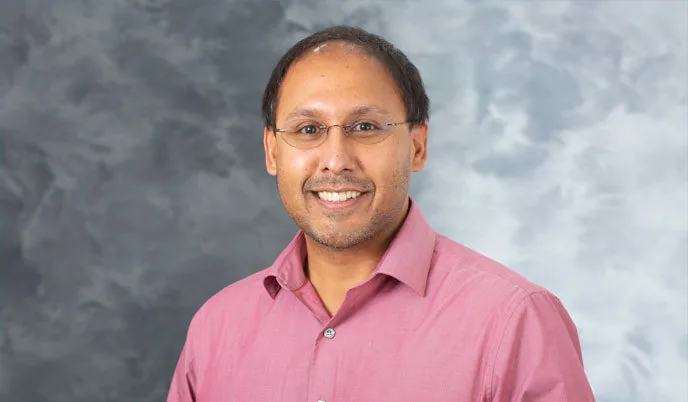
Anjon Audhya assumes inaugural role of vice dean for research
Anjon Audhya, PhD, will become the inaugural vice dean for research for the University of Wisconsin School of Medicine and Public Health effective April 19. The role serves as the chief research officer for the school, charged with articulating the goals and vision of the school’s research enterprise to major stakeholder groups and planning for the long-term success and global impact of research activities.
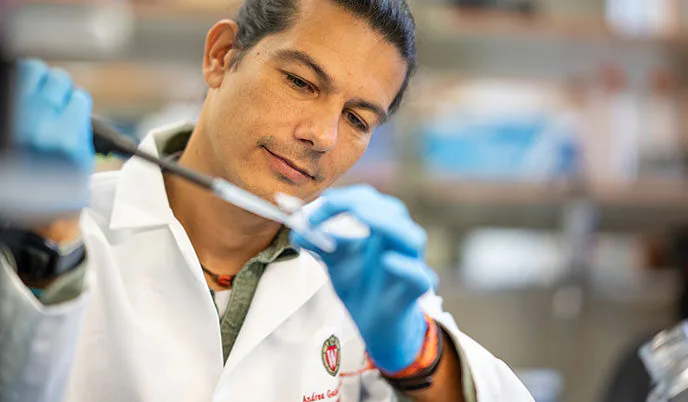
Scientists discover molecular mechanism that could boost calorie burning
GLP-1 drugs have transformed weight loss by suppressing appetite. The other half of the equation — helping the body burn more energy — has received less attention.
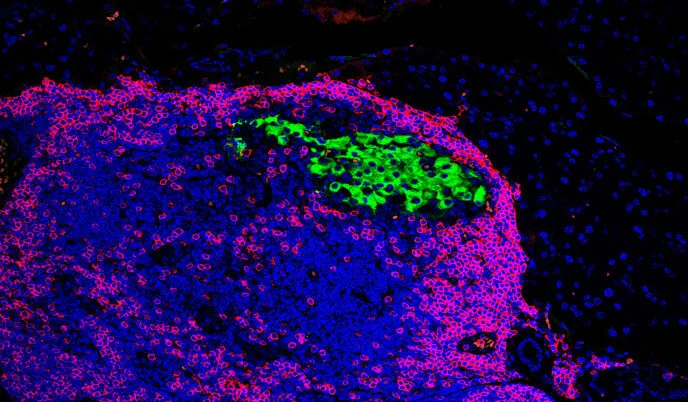
Disabling one gene protects mice against Type 1 diabetes
UW–Madison researchers have uncovered a possible way to protect key cells in the pancreas that are targeted during the development of Type 1 diabetes.
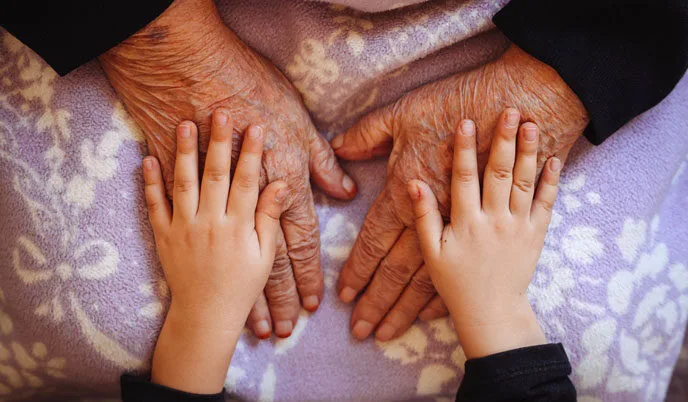
UW launches new research center to examine aging and age-related diseases
A new research center at the University of Wisconsin School of Medicine and Public Health will focus on understanding how metabolic changes associated with aging influence health and cause disease.
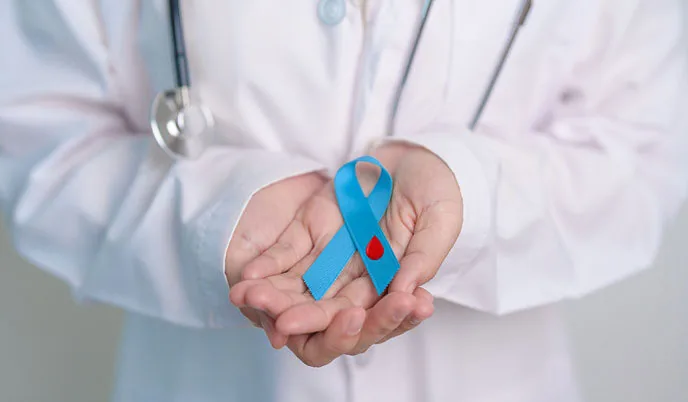
UW researchers tackle diabetes from multiple angles
Diabetes is a growing epidemic in Wisconsin. Its rise has been linked to limited access to healthy food and health care in some communities, lower levels of physical activity, and a rise in obesity, among other factors.

An early roadmap to preventing a devastating childhood brain cancer
Stopping genetic mutations that cause a rare but aggressive brain tumor in children may be the key to preventing the cancer’s development in the first place, according to researchers in the UW School of Medicine and Public Health.
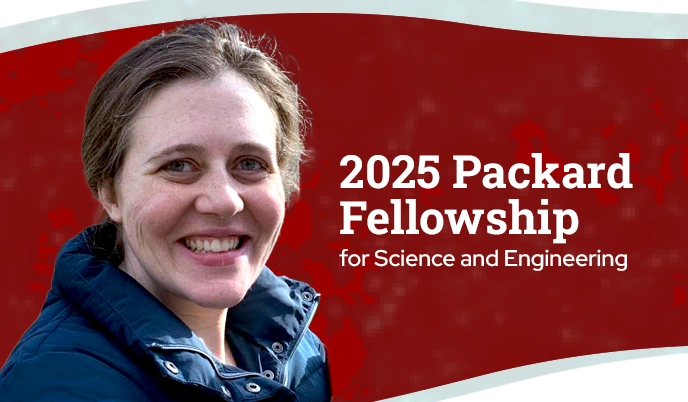
Andrea Putnam awarded 2025 Packard Fellowship
Andrea A. Putnam, a University of Wisconsin School of Medicine and Public Health assistant professor of biomolecular chemistry, has been named a 2025 Packard Foundation Fellow in Science and Engineering.
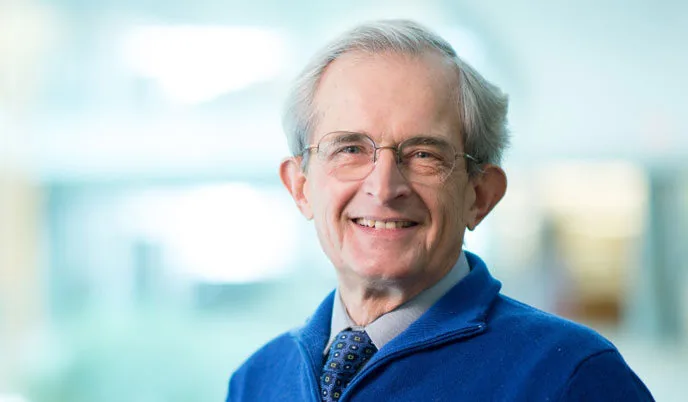
James Dahlberg receives American Innovator Award
James Dahlberg, a professor emeritus of biomolecular chemistry whose research led to a widely accessible colon cancer screening test, received the American Innovator Award from the Bayh-Dole coalition in June.
Anjon Audhya becomes senior associate dean for basic research, biotechnology, and graduate studies
Anjon (Jon) Audhya, PhD, has been named the University of Wisconsin School of Medicine and Public Health’s next senior associate dean for basic research, biotechnology and graduate studies.

Patricia Kiley elected 2020 AAAS Fellow for research on bacterial oxygen response
Patricia Kiley, PhD, professor and chair of biomolecular chemistry, has been elected a 2020 fellow of the American Association for the Advancement of Science. She is one of six fellows elected from the University of Wisconsin–Madison this year.

Remembering Heidi Dvinge
Heidi Dvinge, PhD, assistant professor of Biomolecular Chemistry and a member of the Carbone Cancer Center, passed away on September 20, 2019. With great sorrow over the loss of a brilliant young scientist, colleague, mentor and friend, we honor her memory and her scholarly work.