

Research agreement signed with Accuray to improve personalized cancer care
A new 10‑year strategic collaboration between the University of Wisconsin School of Medicine and Public Health and Accuray Incorporated will support clinical research, education and training, and development of adaptive therapies that help empower medical care teams to continually raise the standard in cancer care.

Anjon Audhya assumes inaugural role of vice dean for research
Anjon Audhya, PhD, will become the inaugural vice dean for research for the University of Wisconsin School of Medicine and Public Health effective April 19. The role serves as the chief research officer for the school, charged with articulating the goals and vision of the school’s research enterprise to major stakeholder groups and planning for the long-term success and global impact of research activities.

Collaborative research effort reveals biomarkers for Huntington’s disease
Two UW professors collaborated to analyze a large dataset from PREDICT-HD, one of the largest studies of early Huntington’s disease ever conducted.
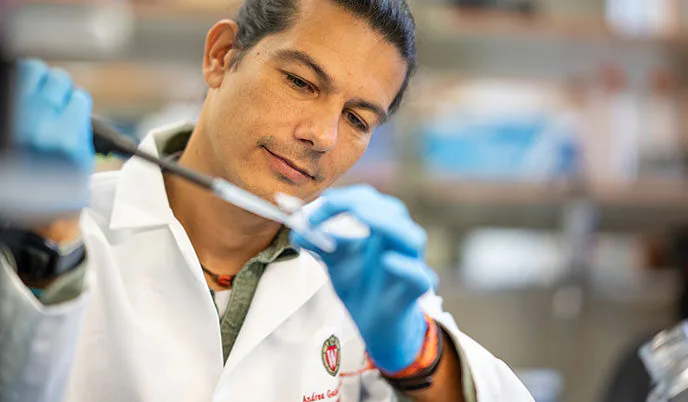
Scientists discover molecular mechanism that could boost calorie burning
GLP-1 drugs have transformed weight loss by suppressing appetite. The other half of the equation — helping the body burn more energy — has received less attention.

Clinical trial tests new cell therapy to manage kidney transplant rejection
A first-of-its-kind clinical trial at the Program for Advanced Cell Therapy will examine a new method to manage kidney rejection following transplant.
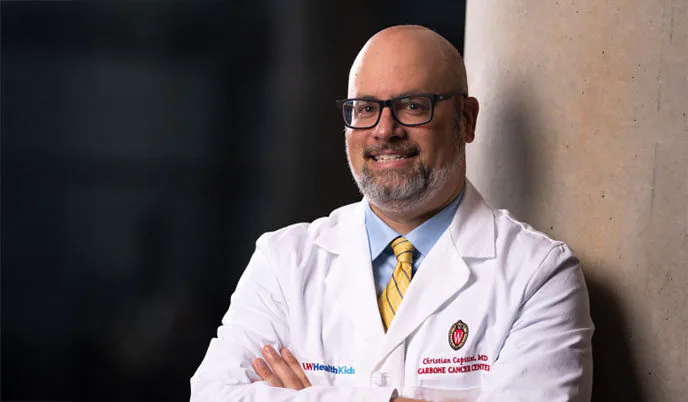
Christian Capitini named director of the UW Carbone Cancer Center
The University of Wisconsin School of Medicine and Public Health and UW Health are pleased to announce that Dr. Christian Capitini, a national expert in the treatment and research of childhood cancers, has been named the next director of the University of Wisconsin Carbone Cancer Center. He will assume the role of Carbone Cancer Center director on April 19.

Eight researchers transforming colorectal cancer care
March is National Colorectal Cancer Awareness Month, established to raise awareness for a disease that is largely preventable. Colorectal cancer is now the leading cause of cancer death in adults under 50 and the only major cancer where mortality is rising in younger adults, according to a 2026 report from the American Cancer Society.

How AI is advancing medical research
Able to absorb, examine and analyze staggering amounts of data, artificial intelligence (AI) helps medical researchers identify disease patterns and predict patient outcomes.

Preparing medical residents to practice lifestyle medicine
Americans are getting sicker earlier in life. More than half of young adults aged 18-34 years report at least one chronic condition, such as obesity or diabetes, and adults in midlife are increasingly likely to have two or more.
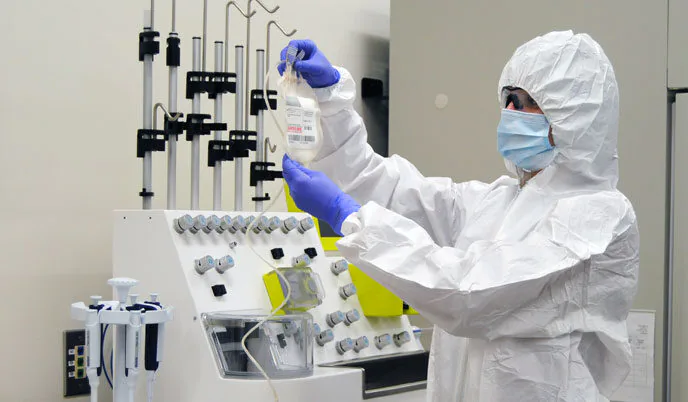
Cell therapy for Sjögren’s disease earns FDA Fast Track designation
A therapy currently being tested in a clinical trial at the University of Wisconsin School of Medicine and Public Health to treat a common symptom of Sjögren’s disease recently got a boost from the Food and Drug Administration.
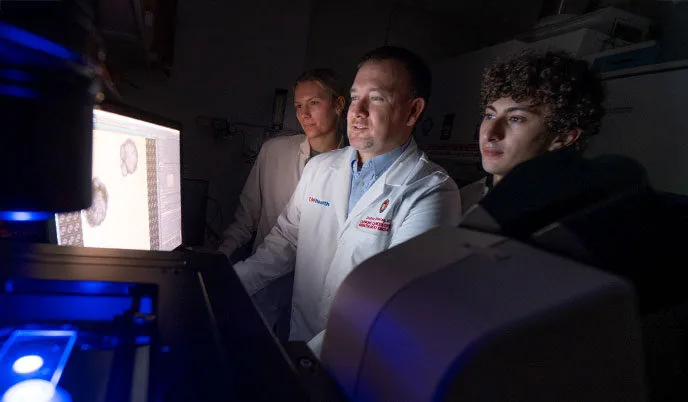
UW–Madison and Immuto Scientific to collaborate on novel cancer target discovery
University of Wisconsin–Madison and Immuto Scientific have officially entered into a collaborative agreement to identify disease-specific, novel therapeutic targets in colorectal cancer.
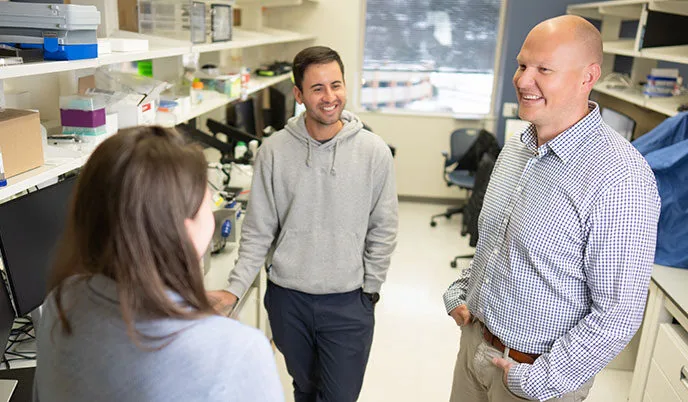
Q&A: Christopher Sundberg on the role of muscles in the aging process
What determines healthspan, the term used to describe the number of years people live in good health and free from chronic disease? Muscle physiology plays a key role.