
UW study uses ‘bio-panning’ to find human antibodies for brain cancer stem cells
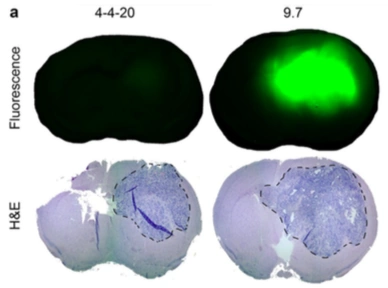
Using a method described as similar to panning for gold, Carbone Cancer Center scientists discovered human antibodies for the cancer stem cells of glioblastoma, one of the most difficult brain cancers to treat.

Wisconsin Alzheimer’s Disease Research Center launches podcasts
“Dementia Matters” podcasts that offer basic information about Alzheimer’s disease are now available from the University of Wisconsin School of Medicine and Public Health.
Leading cause of vision loss in older adults shows dramatic decline
The risk of developing age-related macular degeneration (AMD), the leading cause of vision loss in older adults, has decreased significantly for the baby boom generation.
Patrick McKenna named president of American Association of Clinical Urologists
Patrick McKenna, MD, chief of the Division of Pediatric Urology at the University of Wisconsin School of Medicine and Public Health, has assumed the role as president of the American Association of Clinical Urologists (AACU).

Darcie Moore receives grant to study how brain cells age
A new grant of $100,000 will allow Dr. Darcie Moore to study how neural stem cells age, and how this can lead to cognitive decline and other maladies of old age.
New clinical tool identifies patients likely to have seizures
A new scoring system developed by a UW School of Medicine and Public Health neurologist may help physicians identify which critically ill patients are likely to have seizures.
Finding by neurosurgeon Amgad Hanna rewrites anatomy textbooks
Neurosurgeon Amgad Hanna knew that what he saw in the operating room did not match the diagrams depicted in anatomy textbooks.
Obesity: ethical dilemma and public health challenge
In spring 2013, faculty members from the University of Wisconsin School of Medicine and Public Health Department of Medical History and Bioethics orchestrated a gathering of national thought leaders who debated a wide arc of viewpoints related to obesity.
Social-class discrimination contributes to poorer health
Discrimination felt by teenagers based on their social class background can contribute to physiologic changes associated with poorer health, according to a new study led by a University of Wisconsin–Madison researcher.
Psychopaths’ Brains Show Differences in Structure and Function
Images of prisoners’ brains show important differences between those who are diagnosed as psychopaths and those who aren’t, according to a study led by University of Wisconsin–Madison researchers.
Gene therapy for type 1 diabetes aims to eliminate daily insulin injections
Researchers at the University of Wisconsin School of Medicine and Public Health are one step closer to developing a gene therapy for Type 1 diabetes mellitus – a development that could one day eliminate the need for daily insulin shots and provide a way to better regulate glucose metabolism, a factor critical for preventing the most problematic complications of the disease.

Daniel Resnick chosen to lead the North American Spine Society
UW Health spine surgeon Dr. Daniel Resnick was elected president of the 8,000-member North American Spine Society at its annual meeting this month.