

Flu surveillance continues with $2.4 million CDC award
A researcher has received a $2.4 million award from the Centers for Disease Control and Prevention (CDC) to continue his work that has found flu activity in schools is a good warning system for flu activity in the community.
Wisconsin researchers awarded $5.3 million for NIH precision medicine research
Three Wisconsin based medical and scientific organizations – Marshfield Clinic Research Institute, University of Wisconsin School of Medicine and Public Health and Medical College of Wisconsin – have collectively been awarded $5,360,832 to help implement in Wisconsin the National Institutes of Health’s (NIH’s) All of Us Research Program that aims to benefit communities across the country.
New pancreatic cancer study uses optical imaging to craft better treatments
Pancreatic cancer research at the University of Wisconsin Carbone Cancer Center (UWCCC) is getting a big boost, thanks to a $3 million grant from the National Cancer Institute.
Study provides cellular explanation for higher risk of prostate cancer in aging men
The link between aging and prostate cancer development is now better understood, based on a study by University of Wisconsin Carbone Cancer Center researchers.
UW Carbone Cancer Center researchers win two national prostate cancer awards
UW Carbone Cancer Center researchers won two of the six national Challenge Awards announced this week by the Prostate Cancer Foundation and the Movember Foundation.
Stephen Meyn to lead Center for Human Genomics and Precision Medicine
As the University of Wisconsin School of Medicine and Public Health embarks on its strategic plan to build a world-class, state-of-the-art precision medicine and genomics center, it has begun the process by choosing its first director.
Carbone study find protein that improves immune response in colon cancer
A better understanding of the function of non-cancerous cells and tissue surrounding colon cancer cells is providing a clearer picture of how the immune system recognizes and accesses the cancer site, according to a new study by University of Wisconsin Carbone Cancer Center (UWCCC) researchers.
UW researchers discover mechanism for red blood cell regeneration with anemia
Researchers at the UW School of Medicine and Public Health have established a new mechanism that explains how red blood cells regenerate and survive in mice experiencing severe anemia.

Jeniel Nett awarded funding for research to combat medical device biofilms
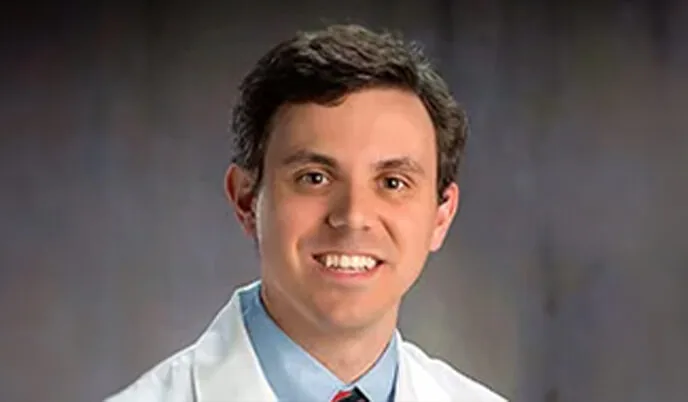
Andrew Baschnagel wins UW Carbone award for lung cancer study
The University of Wisconsin Carbone Cancer Center (UWCCC) has awarded Dr. Andrew Baschnagel its 2017 Young Investigator Award. Baschnagel is a radiation oncologist who specializes in treating patients with lung and other thoracic cancers. He joined the Cancer Center in 2014.
Study shows sports specialization may lead to more lower extremity injuries
High school athletes who specialized in a single sport experienced more lower-extremity injuries than athletes who participated in a variety of sports throughout the year, according to a new study presented yesterday at the annual meeting of the American Orthopaedic Society for Sports Medicine.
Investigators are tracking America’s deadliest killer: Tobacco addiction
Mike Eheler didn’t want to die and leave his wife and four kids without him. Like most smokers, he became addicted as a kid. He had smoked for 23 years, his grandmother had died from lung cancer, and now he could feel the toll on his health — and on his ability to support his family in the way he’d dreamed. It was slipping away, one $7 pack of carcinogens at a time.