Nutrition is critical to human thriving, helping to prevent disease, support healing, and improve long‑term health. At the UW School of Medicine and Public Health, medical students learn how evidence‑based nutrition can shape patient care across every specialty.
What we eat and drink has a profound impact on our health. Research has linked diets high in excess calories, saturated fat, sodium and added sugars to the development or worsening of conditions such as type 2 diabetes, obesity, and heart disease, while a well-balanced diet has been shown to lower disease risk and extend healthspan, the number of years spent free from chronic disease and disability. Doctors who understand not only the biochemistry of nutrition, but also the social factors that can determine a patient’s nutritional status, are better prepared to provide care and improve patient outcomes.
Since 2016, the UW School of Medicine and Public Health’s innovative MD ForWard Curriculum has provided medical students with more than 65 hours of nutrition education, planned and taught in partnership with medical educators and scientists, as well as registered dietitian nutritionists from the Department of Nutritional Sciences in the College of Agricultural and Life Sciences. In keeping with the school’s mission as the nation’s first school of medicine and public health, instructors address nutrition not only within the doctor-patient relationship but also within the context of public health.
A staple of the curriculum
Nutrition education begins in a first-year course called Food, Fasting and Fitness, where medical students are introduced to foundational concepts related to nutritional biochemistry (including basic metabolism), the essential roles of macro- and micronutrients in the body, and an overview of the Dietary Guidelines for Americans. Within the same course, lecturers address a variety of topics that add context, from the role of nutrition in disease prevention and disease management to the ability of people and populations to access sufficient food that is affordable and nutritious.
The integrated curriculum ensures that students can revisit core concepts as they progress from preclinical blocks to clinical blocks with disciplines such as obstetrics, gynecology and pediatrics, family medicine, and surgery.
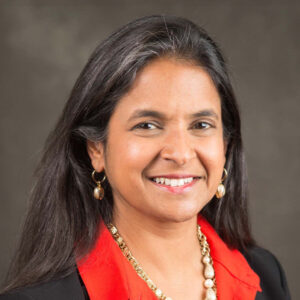
Shobhina Chheda
“We don’t have a course called ‘Nutrition,’ where students learn the basics and move on, never to discuss them again,” said Dr. Shobhina Chheda, associate dean for medical education. “The ForWard Curriculum allows students to encounter concepts in spaced repetition, through case studies, clinical experiences and subsequent courses.”
Throughout their learning, Chheda said, students consider questions such as: How can my patient get access to healthy food in their community? What are evidence-based recommendations for newborns and breastfeeding? What are the risks of introducing nutrition after fasting due to illness?
“One of the things we pride ourselves on is the constant fine-tuning and evolution of the content based on evidence and science, so that we are teaching our students the best of what is currently known on any given topic,” said Chheda.
Keeping learning dynamic and fresh
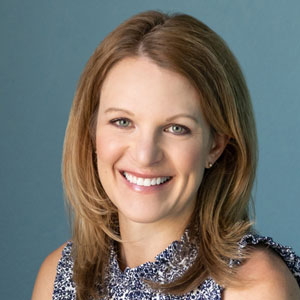
Tara LaRowe, PhD, RDN, is one of three registered dietitian nutritionists who help faculty physicians plan and teach the nutrition component of the ForWard Curriculum. An assistant teaching professor in the Department of Nutritional Sciences within the College of Agricultural and Life Sciences, LaRowe is an experienced instructor who has also worked as a clinical nutritionist at UW Health’s Preventive Cardiology Clinic and an assistant scientist in the Department of Family Medicine. She views the collaboration between nutrition sciences and medical education as beneficial for both sides. Not only do medical students receive expert, up-to-date instruction on nutrition, but they also learn that dietitians can be partners in disease prevention and treatment.
Tara LaRowe
“The more opportunities we have to interact with soon-to-be physicians, the more they see the value of RDNs as members of their interdisciplinary teams,” said LaRowe, who earned her doctorate in nutritional sciences at UW–Madison. “Dietitians can partner with doctors on nutrition counseling, medical nutrition therapy, and more.”
Nutrition is a complex field, and research is constantly providing more insights, requiring dietitians, physicians and health leaders to revise evidence-based approaches. Fad diets are an example of a new topic now under discussion, according to LaRowe.
“We talk about the implications of fad diets, which may aid with weight loss in the short term but do not meet all nutrient needs and are not sustainable,” she said. “Another topic I am expecting to cover in the coming years is GLP-1 medications, which are drugs that are wonderful tools for weight loss but can also cause nutrient deficiencies if not monitored by physicians and dieticians.”
Case-based learning is a hallmark of the ForWard Curriculum. In 2023, the learning team redesigned the curriculum’s nutrition-based cases to emphasize cardiovascular disease prevention, malnutrition and pediatric micronutrient deficiencies. Each case is based on real patient situations (with all identifying details removed) and discussion is led by a faculty member with expertise in the area being discussed.
We are not teaching them to be experts in nutrition – we are teaching them to be expert doctors, which is about knowing how to access the best evidence and incorporate that into the care of patients.
Shobhina Chheda, MD, MPH
LaRowe said case-based learning, in which small groups of students work together to solve a problem and generate a patient treatment plan, helps solidify concepts.
“Students appreciate that these are drawn from what is seen in clinic,” LaRowe said. “It makes them feel like what they are learning is relevant, which makes them excited to learn more.”
Chheda, who earned a bachelor of science degree in nutritional biochemistry before becoming a doctor, has seen the evidence of what is known and accepted about nutrition change over the last thirty years. She emphasized the importance of teaching students not only the latest information, but ways to stay current long after they leave medical school.
“We want our students to graduate with a drive to keep learning,” said Chheda. “It’s not about drawing forever on what they learned here. We are not teaching them to be experts in nutrition – we are teaching them to be expert doctors, which is about knowing how to access the best evidence and incorporate that into the care of patients, as well as how to access public health resources and work with trained dietitians.”