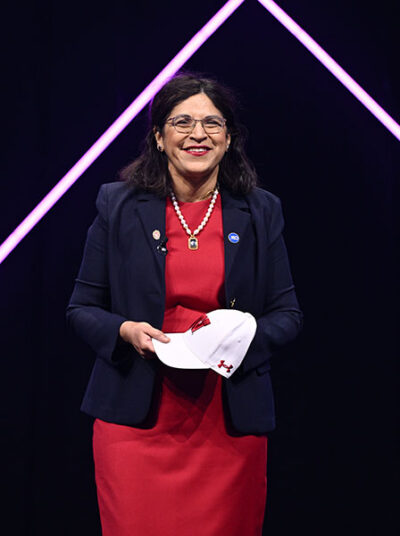
Dean Nita Ahuja on stage at AAMC’s Learn Serve Lead 2026 meeting. (Photo by Sardari Group)
Share
At the annual Learn Serve Lead conference of the Association of American Medical Colleges (AAMC), three representatives from the University of Wisconsin School of Medicine and Public Health were celebrated for their leadership and dozens of other faculty, staff and learners presented posters, talks and engaged in sessions.
The meeting convened thousands of representatives from across academic medicine who gathered in Anaheim, California on Nov. 6-10 to reflect on the past, present and future of academic medicine and tackle the field’s most pressing challenges together. Attendees represented 176 member U.S. medical schools, as well as more than 400 academic health systems and 70 academic societies.
This year’s theme, “From Legacy to Next,” served to celebrate the organization’s 150th anniversary while setting the stage for a future-focused agenda with sessions dedicated to what’s to come in the next century and beyond. School leaders played key roles in the discussions.
Dean Nita Ahuja assumes chairship of AAMC Board of Directors
Nita Ahuja (Photo by Sardari Group)
On Nov. 10, Nita Ahuja, MD, MBA, dean of the school and vice chancellor for medical affairs at UW–Madison, began her term as chair of the 2026–27 AAMC Board of Directors. The 19-member board is composed of a distinguished group of physician leaders, educators, researchers, health system executives and learners who help guide the organization’s mission.
I look forward to how we can build a future together for academic medicine filled with hope and optimism.
Nita Ahuja
Viewing academic medicine as a force for societal good, Ahuja seeks to shine a light on the sector’s innovative workforce training, world class care and cutting-edge research that creates hope and solutions for patients.
“I’ve never been more excited about what is to come in our next 150 years,” Ahuja said. “Leading in academic medicine and transforming health care is at the heart of AAMC’s mission. From educating future physicians to researching new cures to caring for patients and communities, I look forward to how we can build a future together for academic medicine filled with hope and optimism.”
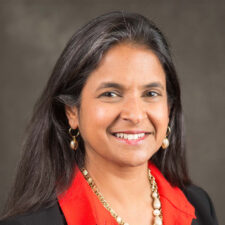
2026 Alpha Omega Alpha Robert J. Glaser Distinguished Teacher Award: Shobhina Girish Chheda, MD, MPH
Shobhina Chheda
Among the AAMC Presidential Award honorees celebrated at the conference was Dr. Shobhina Chheda, associate dean for medical education and professor of medicine, who was one of four medical educators to receive the highest level of national recognition as an Alpha Omega Alpha Robert J. Glaser Distinguished Teacher Awardee.
Chheda’s leadership over almost 25 years as a faculty member has impacted thousands of students. In her current role she has oversight of the school’s medical curriculum, assessment and leadership of the Medical Education Office and her scope spans the administration of statewide clinical training sites in partnership with four major health systems, and she directs a team of more than 70 faculty and 10 staff. One of her most transformative achievements was implementing the ForWard Curriculum, which launched in 2016 as the most extensive curricular reform at the UW School of Medicine and Public Health since 1926.
At the heart of her work is cultivating clinical excellence by supporting students’ passion for learning and encouraging them to heed the experiences of their patients. In a video reflecting on the AOA Robert J. Glaser award, she said, “I think one of the most important things is the ability to truly, truly listen to the patient in front of you.”
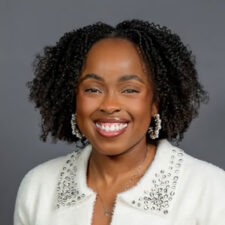
2026 Herbert W. Nickens Faculty Fellow: India Anderson-Carter, MD
India Anderson-Carter
The school also had a winner among AAMC’s programmatic and leadership awards, with Dr. India Anderson-Carter assistant professor of obstetrics and gynecology, earning the 2026 Herbert W. Nickens Faculty Fellowship. The fellowship recognizes an outstanding assistant professor who demonstrates great leadership potential in their efforts to promote opportunity in medical education and quality in health care for all.
Anderson-Carter graduated from the UW School of Medicine and Public Health in 2020 and completed her residency in obstetrics and gynecology at UW Hospitals and Clinics before becoming an assistant professor in the school. She has quickly emerged as a talented and respected physician, educator and leader who is dedicated to improving health outcomes for women and babies.
She serves on the Wisconsin Maternal Mortality Review Committee and within her first year as a faculty member had secured competitive funding from the American College of Obstetricians and Gynecologists to advance respectful obstetric care. She also co-leads a funded research project examining inequities in postpartum pain management.
For the award program booklet, Anderson-Carter wrote, “My thanks to my department, my institution, and the AAMC for believing in me and the vision of a health care system where trust thrives and equitable, high-quality care is not an aspiration but a reality.”
Medical educators and researchers share expertise
Learners, faculty and staff from UW were engaged in many of the poster sessions, panels and talks throughout the conference, with topics ranging from cultivating leadership skills in health professions learners, to a panel discussion on best practices in medical education administration, to a panel discussion involving Dr. Elizabeth Petty, senior associate dean for academic affairs, about encouraging civil dialogue to bridge differences in health professions education.
Four medical students — Sebastian Garcia, Megan Piton, Anna Brooks and Elenai Dai — attended as representatives in their elected roles in the AAMC Organization of Student Representatives. Pathology resident Dr. Alex Tannenbaum and surgery resident Dr. Charna Kinard served as members of the Organization of Resident Representatives.
As the leading voice for academic medicine, AAMC serves as the professional home for faculty and staff in the discipline. The organization supports aspiring medical students and trainees, provides data that informs biomedical research at medical schools and academic health systems, and represents the interests and concerns of academic medicine to elected officials.
The conference offered an uplifting message, encouraging colleagues from every corner of academic medicine to take inspiration in the purpose and meaning of their work. The gathering marked the last conference at which AAMC President and CEO Dr. David J. Skorton presided in his leadership role, as he has announced his plans to retire in June 2027 after serving since June 2019.
“Academic medicine brings disciplines and people together in service of something deeply human,” Skorton said in remarks at a plenary session. “It is a place where science, service, and the human experience come together every day.”