

Collaborative research effort reveals biomarkers for Huntington’s disease
Two UW professors collaborated to analyze a large dataset from PREDICT-HD, one of the largest studies of early Huntington’s disease ever conducted.

How AI is advancing medical research
Able to absorb, examine and analyze staggering amounts of data, artificial intelligence (AI) helps medical researchers identify disease patterns and predict patient outcomes.
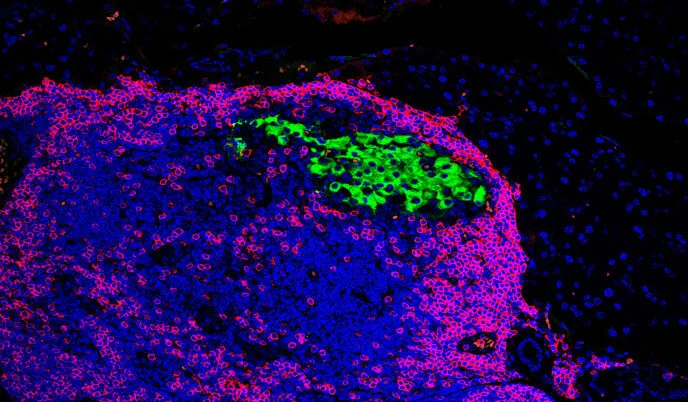
Disabling one gene protects mice against Type 1 diabetes
UW–Madison researchers have uncovered a possible way to protect key cells in the pancreas that are targeted during the development of Type 1 diabetes.

New study supports recommendation to begin mammogram screening at 40
Breast cancer screening every two years beginning at age 40 has the potential to reduce the number of women who die of breast cancer while minimizing the harms, according to a large study published today.

UW researchers looking for new ways to screen for ovarian cancer, earlier detection
A project began today at the UW–Madison Prevention Research Center that is focused on earlier detection of ovarian cancer.

Researchers develop 3D hand-sensing wristband using UW software
Researchers from Cornell and the University of Wisconsin–Madison have designed a wrist-mounted device and developed software that allows continuous tracking of the entire human hand in three dimensions.

New tool predicts three-dimensional organization of human chromosomes
University of Wisconsin–Madison researchers have developed a computational tool that can accurately predict the three-dimensional interactions between regions of human chromosomes.
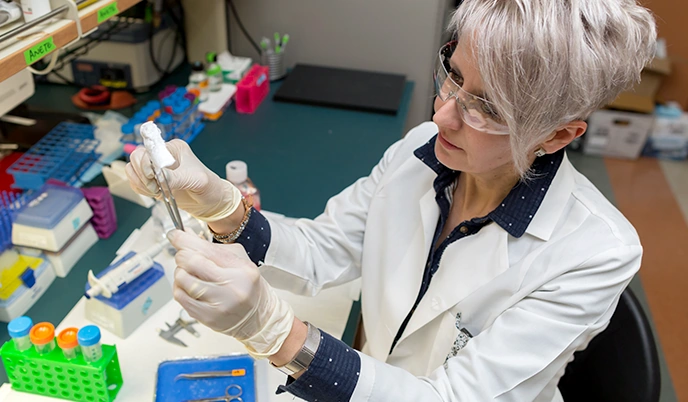
UW researchers use stem cells to develop vocal folds in a dish
Researchers at University of Wisconsin School of Medicine and Public Health have created an in vitro 3-D model of human vocal fold tissue (called mucosa) that could improve our understanding and treatment of disorders affecting the human voice.

Biostatistics and medical informatics tapped for $11.8 million national coordinating center
A University of Wisconsin-Madison professor and his team have been chosen to lead the nation’s coordinating center for the National Cancer Institute (NCI) Cancer Prevention Clinical Trials Network (CP-CTNet).

Michael Newton named chair of biostatistics and medical informatics
A leader in the use of statistical computing and inference in areas including genomics, molecular biology and cancer, Michael Newton, PhD, has been named chair of the Department of Biostatistics and Medical Informatics at the University of Wisconsin School of Medicine and Public Health.
Limited access to athletic trainers in high schools leads to unreported, mismanaged sports concussions
Student athletes attending high schools with limited access to athletic trainers are far less likely to have a sport-related concussion identified, assessed and managed properly, compared to schools with athletic trainers available consistently during both practice and competition.
Researchers one step closer to learning how calorie restriction extends lifespan in animals
A multidisciplinary research team at the University of Wisconsin–Madison has uncovered new clues about calorie restriction and how it works to delay aging and age-related diseases.