

Q&A: Jacques Galipeau on cell therapies to cure disease
Dr. Jacques Galipeau is the associate dean for therapeutics development and the director of the Program for Advanced Cell Therapy (PACT), a collaboration between UW Health and the University of Wisconsin School of Medicine and Public Health that aims to bring innovative cell therapies to patients. He is also a practicing hematologist, treating patients with blood clot disorders, anemia, and other diseases and conditions.

World Breast Cancer Research Day
World Breast Cancer Research Day is celebrated on the 18th day of the eighth month of the year — a reference to the one in eight women and one in 833 men who will be diagnosed with breast cancer in their lifetimes. The day is intended to amplify the urgency of preventing disease and finding cures, as well as shine a light on critical research, including studies supported by federal funding.

Medical students prepare to meet rising Latino dementia care needs
Researchers in Madison are partnering with a Milwaukee-based Latino community center on a new, culturally competent elective course for students at the University of Wisconsin School of Medicine and Public Health. The course is focused on training the next generation of doctors in dementia care for the Latino community.

AI screening tool helps refer patients for opioid use disorder treatment
An artificial intelligence-driven screening tool developed by a research team at the University of Wisconsin School of Medicine and Public Health successfully identified hospitalized adults at risk for opioid use disorder and recommended referral to inpatient addiction specialists.

Q&A: Sara McCoy on innovative treatment for Sjögren’s disease
Dr. Sara McCoy, a rheumatologist in the Department of Medicine, is one of the nation’s leading experts on Sjögren’s disease, an autoimmune disorder that affects moisture-producing glands in the eyes, mouth and other parts of the body.

Experimental cell therapy trial treats first Sjögren’s disease patient
The first person in the world to receive a dose of a novel cell therapy for a symptom of the immune disorder Sjögren’s disease has been treated during a clinical trial conducted by researchers at the University of Wisconsin School of Medicine and Public Health.
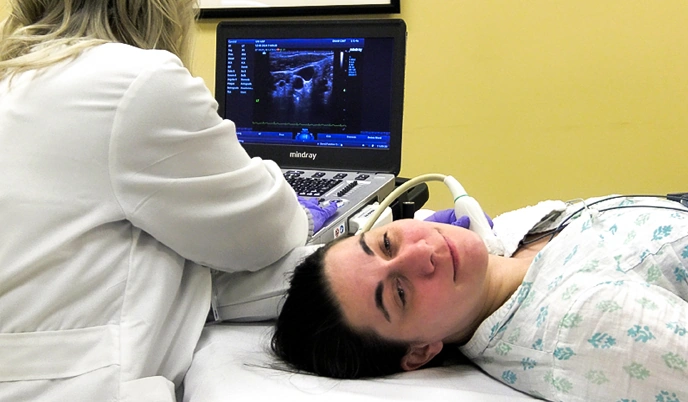
Study launches to test effects of vaping on cardio-pulmonary health
The National Institutes of Health have awarded a five-year, $5.7 million grant to UW to study the long-term effects of vaping on heart and lung health.

Brain scans begin for nationwide Alzheimer’s disease study
Research participants have begun volunteering for brain scans at the University of Wisconsin School of Medicine and Public Health in Madison for a national study on Alzheimer’s disease and related dementias.

Bret Benally Thompson named Physician of the Year
Dr. Bret Benally Thompson was working as a police officer in Texas when he had a “waking vision,” as he describes it, that directed him to pursue his dream of becoming a doctor.

Grants power two decades of statewide impact
The university’s medical school would not be the UW School of Medicine and Public Health without the Wisconsin Partnership Program (WPP), celebrating its 20th anniversary this year.
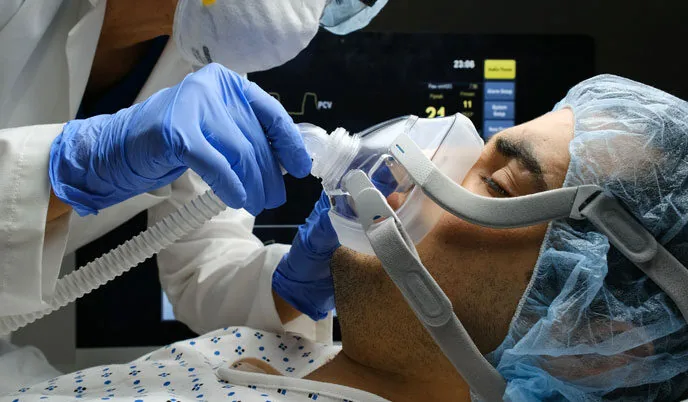
Noninvasive ventilation better for patients
Recently published results from a clinical trial showed that for critically ill adults needing tracheal intubation for emergency airway support, the method health care providers choose to use for providing supplemental oxygen before the intubation procedure affects the patient’s risk of hypoxemia, or potentially life-threatening low levels of blood oxygen.

Humid heat impacts dialysis patients
A large, population-based study shows that people receiving regular dialysis to treat kidney disease are vulnerable during heat waves, especially those living in cities in the humid southeastern states, resulting in higher death rates.