

Gut compound identified as next target for reducing Alzheimer’s risk
Higher levels of imidazole propionate, a compound produced by some bacteria in the gut, contribute to dementia-related changes in the brain.

Study linking environmental factors and Alzheimer’s disease awarded NIH funding
A nationwide study led by the University of Wisconsin School of Medicine and Public Health that explores the relationship between Alzheimer’s disease, environmental factors and lifetime experiences has been awarded a second round of funding from the National Institutes of Health (NIH).

A comprehensive approach to dementia
No cure exists — yet — for Alzheimer’s disease, the brain disorder that slowly destroys memory and thinking skills, along with the ability to complete daily tasks. But dozens of researchers at the University of Wisconsin–Madison, many of them within the UW School of Medicine and Public Health, are working on ways to prevent, slow and cure the disease.

How AI is advancing medical research
Able to absorb, examine and analyze staggering amounts of data, artificial intelligence (AI) helps medical researchers identify disease patterns and predict patient outcomes.

Alzheimer’s blood test validated with help from UW–Madison data
The first blood plasma test to identify hallmarks of Alzheimer’s disease was cleared in May by the U.S. Food and Drug Administration (FDA), and University of Wisconsin researchers provided a portion of the samples used in the clinical validation test.

Stronger communities, healthier futures: the Wisconsin Idea at work

Medical students prepare to meet rising Latino dementia care needs
Researchers in Madison are partnering with a Milwaukee-based Latino community center on a new, culturally competent elective course for students at the University of Wisconsin School of Medicine and Public Health. The course is focused on training the next generation of doctors in dementia care for the Latino community.

Brain scans begin for nationwide Alzheimer’s disease study
Research participants have begun volunteering for brain scans at the University of Wisconsin School of Medicine and Public Health in Madison for a national study on Alzheimer’s disease and related dementias.

Art Walaszek named associate dean for faculty affairs and development
Dr. Art Walaszek has been named the next associate dean for faculty affairs and development at the University of Wisconsin School of Medicine and Public Health.

Midlife testing may help predict later cognitive impairment
When researchers test motor skills, hearing, vision and smell in people in their midlife, they are better able to identify those who may develop cognitive decline or impairment 10 years later, according to a new study by researchers at the University of Wisconsin School of Medicine and Public Health.

Gut inflammation linked to aging and Alzheimer’s disease
A new study by researchers at the University of Wisconsin School of Medicine and Public Health suggests a link between gut inflammation and changes in the brain and declines in memory, further supporting a connection between the gut and brain in Alzheimer’s disease.
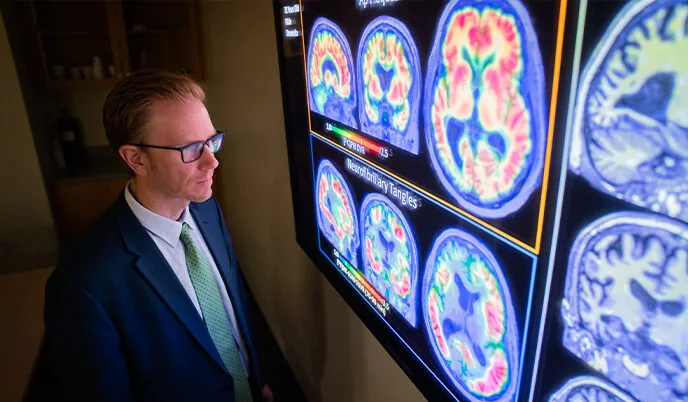
UW–Madison receives $150 million grant to lead nationwide Alzheimer’s disease study
The University of Wisconsin School of Medicine and Public Health has been awarded funding from the National Institutes of Health for a nationwide research initiative to investigate the neurobiology of Alzheimer’s disease and related dementias.